Showing posts with label Sports car. Show all posts

Saturday, September 15, 2012

Hyundai Genesis Coupe: A Lesson in Frugality for the Sports Segment


While the auto industry was cracking under economic pressures in 2008 and sales were down most auto makers were feeling the heat. But while others were scrambling to make their cars more affordable, sporty, refined, and generally as appealing as they could, Hyundai sat back and enjoyed the fruits of its labour. Global sales may have been down by 15.1%, but you’d never guess if you only looked at Hyundai whose sales actually increased by 25.3% in the first quarter of ’09. And all in one sudden flash it became clear that they were no longer the strange, cheap foreign car manufacturer that we’d remembered. Hyundai alone seemed to be gaining valuable ground on the economic front and began muscling into Honda and Toyota’s territory as they accounted for 7.1% of Canadian light vehicle sales in ‘09, 10% if you count its sister company Kia. All this success can be traced back to just one element: the cars. Hyundai was snatching up all the sales coming from the boom in the compact market by offering cheap, efficient, and reliable compacts and sub-compacts like the Elantra and Accent.

And one good turn deserves another as Hyundai broadened its line up in 2008 to include an entry level luxury sedan called the Genesis, which offered something that no one had anticipated in a entry level luxury coming from an economy company, Rear Wheel Drive. The Genesis met with instant success and earned AJAC’s best new luxury car under 50k, Canadian Car of theYear, North American Car of the Year, and Consumer Reports Top Rated Upscale Sedan. Hyundai was on a roll and quickly solidified a reputation for producing high quality vehicles in just about every segment of the market.

2009 Canadian Car of the Year: The Hyundai Genesis Sedan

With the inspiring success of the Genesis, Hyundai decided to make the hit a one-two punch by adding a variant of the luxury sedan to the market that would cause a completely new stir. Making its debut at the 2008 New York International Auto Show, Hyundai planned to release the Genesis Coupe for the 2010 model year in North America. Hyundai claimed its Coupe was a proper Rear Wheel Drive sports car that would compete with the likes of the RX-8, Infinity G37, and even the BMW 3-Series, and although it realistically competed with the Nissan Altima Coupe, Honda Accord Coupe, Civic Si, and Cobalt SS, the Genesis Coupe was no doubt a fierce competitor that went into the ring radiating passion and breathing fire.

A rally version of the Genesis Coupe

The Coupe gained valuable publicity from an ad campaign that allowed individuals to edit footage from a project called “epic lap” in which professional stunt driver and drift champ Rhys Millen passionately lapped a course in the Coupe, and post it to edityourown.com. The best edited version of the epic lap would be shown during the Super Bowl and the editor would receive both a cash prize and their own Genesis Coupe. Since then, the Coupe has appeared on TV in series like Leverage, Burn Notice, and 24.


Meant to be a balance of “Brain and Brawn” as Hyundai puts it, the Genesis Coupe offers a 55/45 weight distribution for more neutral handling on the track, RWD for tossability in the corners, and a variety of engines for versatility in real world driving conditions. The base 2.0L four cylinder is turbo charged and good for 210 horses and 223lb. ft at only 2000rpm that clocks a 0-100km/h time of just 8.3 seconds! The turbo charger is sourced from Mitsubishi, resembling the turbo installed in the Evo X, and provides a smooth charge throughout the powerband. Because power starts at just 2000rpm and hp is maxed out at 6000rpm the power band is rather large in the 2.0T base model. The optional 3.8L naturally aspirated Lambda V6 is sourced from the Genesis sedan and is a step up with 306hp and 266lb. ft. which improve 0-100 time to just over 6 seconds!


The engine turns over at a higher than average rate for highway driving at 2600rpm for 100km/h, although a wider ratio would improve the already adequate 10.1/6.6 city/hwy mileage, its closer than average transmission can also be a boon on the track where torque can be capitalized on in various situations and at higher speeds. Still, the engine can drink both regular unleaded and high octane for added versatility, and the low end torque also means driving in high gear for improved efficiency is a breeze.  Both engines come standard with a 6 speed manual transmission and optional with a 6 speed automatic for an extra $1800 on 3.8s and a 5 speed automatic for $1500 on turbos. Both automatic transmissions come with SHIFTRONIC paddle-shifters that shift quickly and smoothly as far as paddle shifters usually go, and although ST usually discourages automatics, these transmissions might be best for those that have trouble shifting quickly while keeping their focus on the track during a race.


Genesis Coupe with Automatic Transmission and Paddle shifters

Standard features abound on the Genesis Coupe and there’s slight refinement inherited from the Genesis Sedan in the Standard conveniences like A/C, trip computer, Bluetooth with steering mounted controls alongside audio and cruise controls, an iPod input jack located in the centre storage bin, leather wrapped steering wheel and shifter, keyless entry, power locks, windows, and power heated mirrors. And of course standard equipment only gets better if you buy the GT trim which adds 19” alloys, 6.5” touch nav system, Automatic climate control, heated leather seats, 360watt Infinity/AM/FM/XM/CD/MP3 10 speaker audio system with a CD changer, a 3 month subscription to XM satellite radio, push button start, HID and auto-leveling headlights, mirror integrated turn signals, and tilt/slide sunroof.
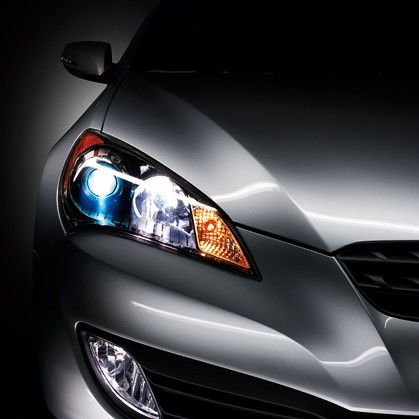
Complimenting all the conveniences are excellent safety features like advanced front, front seat mounted side, and roof mounted curtain airbags, three point pretensioned seat belts, front active head restraints, fog lights, ABS, EBD, ESC and Traction control. The stability and traction controls are especially useful as they help tame the oversteer and traction loss often found in RWD coupes. Also, the auto-leveling headlights are almost as good as adaptive headlights when it comes to keeping the road visible despite bumps or twists. Of course, while riding in the nearly unusable rear seats is both an ergonomic hazard as well as a safety risk, when it comes to peace of mind while driving all that power, the Genesis Coupe doesn’t settle for anything less than its competitors in the front seats.


On the outside Hyundai impresses us by hitting a home run on the first pitch with their Coupe’s styling. The exterior is remarkably handsome for a first attempt at a sports coupe. It has a unique blend of shapes and designs that grab attention with some authority. Staggered standard 18” alloys and optional 19” alloys have an attractive 10 spoke design that compliments the sharp headlights, taillights, and fog lights, and together they give the Coupe an aggressive stance that is fitting for a sports car. The longitudinal mounted engine lengthens the hood’s graceful curves down to the petit front grille that surprisingly doesn’t look out of place in the least. Still there is a lingering notion that the best years for the Genesis coupe’s styling are yet to come. But for the moment, the overall design has great continuity and a unique harmony that is well thought out, and is, dare I say, cool?


From bumper to bumper the Genesis Coupe looks like a true sports coupe


The interior is classic sports coupe; racing inspired, driver oriented with pretty decent front seats and unusable rear seats. But who really cares about the rear seats in a car like this? The front seats are comfortable enough with both manual height and lumbar support adjusters on the driver’s seat and fore and aft adjustable headrests for longer trips on both driver and passenger seats. Visibility is great out of the front and even out of the side windows thanks to a dropped down beltline on the rear side windows that keep the blind spots to a minimum. However, the view out the back is partially obstructed by the high trunk and further spoiled by the trunk lip spoiler. A few things that will bother most buyers are the fact that the steering wheel only tilts and doesn’t telescope, which is strange considering its importance on a sports car, and space is cramped around the center console. As a matter of fact, elbows are bound to hit the center storage bin during shifts.

Although the Genesis Coupe and Sedan share the same first name, a decision that will no doubt confuse many, they are nearly incomparable. One of the most important areas where the Genesis Coupe separates itself from its luxury sedan cousin is in its interior quality. Ergonomics SUCK! The engine and road noise is above average, and although it isn’t loud enough to prompt impulsive use of the 360watt sound system it does need more sound insulation. Furthermore, the center armrest is hard, the door panel armrest is hard, and even the dash is hard. But the most outstanding fouls are the power window, lock, and mirror controls which are mounted to the door in a way that suggests the designer only cared about a racy feel and just stuck them on because they had to go somewhere. Operating any of them is awkward at the least. Still, most won’t buy this car for a plush ride and any hint at the Genesis Sedan’s luxury is misleading.

Similarly, the Genesis Coupe isn’t practical. The trunk only holds 332L of cargo and despite being able to store longer items by folding the rear seats, in order to stow anything substantial like a pair of skis one would either need to move the front passenger seat forward, or fold it down as well. Moreover, the rear seats are only good for throwing jackets or other junk on; shame on anyone that subjects their friends to a ride in them. But, again, no one is going to buy this car because they think it’s practical.

On the track the 2.0L turbo is impressive and offered a better weight balance that resulted in more control through corners and better lap times, but the 3.8L was far from clumsy. Granted one might be tempted by the 3.8L optional engine because of its significantly better acceleration, it might not be worth the cost considering the more than adequate power of the standard turbo charged 2.0. Whichever engine you decide on, if handling is a priority the optional GT suspension package should be on your list. Although the standard setup of MacPherson front struts, and a 5-link independent rear suspension is alright, the GT trim gets you a front strut tower brace, larger front and rear stabilizer bars, stiffer springs, larger bushings, a Torsen LSD, and a Brembo brake system which take the Genesis’ agile nature to a new level. The Brembo brake system is pretty impressive and adds Bridgestone Potenza P225/40VR19 front/ P245/40VR19 rear tires, 13.4/13.0 front/rear ventilated rotors and four-piston monobloc fixed callipers. Actually, considering that the Brembo system costs more if bought aftermarket than the entire GT package, the GT package is a frugal choice for enthusiasts. Still, the ride is punishing on broken or rough pavement, and if you’re looking for a comfortable ride don't even try the Coupe.

Hyundai is one of the best in the business when it comes to warranties, and they make no exceptions for their new sports car. The Genesis Coupe comes with Hyundai’s standard 5 year/100,000km bumper to bumper warranty, which means you can drive this sports coupe carefree for 5 whole years. This already stellar warranty can be lengthened to a whooping 8 years/160,000km for just $2,200! If you’re thinking what we’re thinking, you could sell the Coupe after a few years of fun for better than average market value because it would still be under warranty, that is if you ever plan to sell it.

Oh, but we’ve saved the best for last. Hyundai has pulled off a feat of frugality the likes of which never graced the RWD sport segment until now. The base model Genesis Coupe 2.0T will only cost you $24,495. Although the Coupe is just as good as its competitors and doesn’t really need to undercut them, it does it anyway. And it’s not just sitting at a fairly cheap price; it sincerely takes its competition to the cleaners, everyone one of them, from the Mazda RX-8 ($41,995) and Nissan Maxima ($37,880), to modestly priced FFs like the Honda Accord Coupe ($26,790) and even the Honda Civic Si ($25,990)! By offering a RWD turbo charged sport coupe that costs less than a sporty FWD Honda Civic Hyundai has set the value for money bar even higher, and that’s saying a lot considering they are already market leaders in value for money.

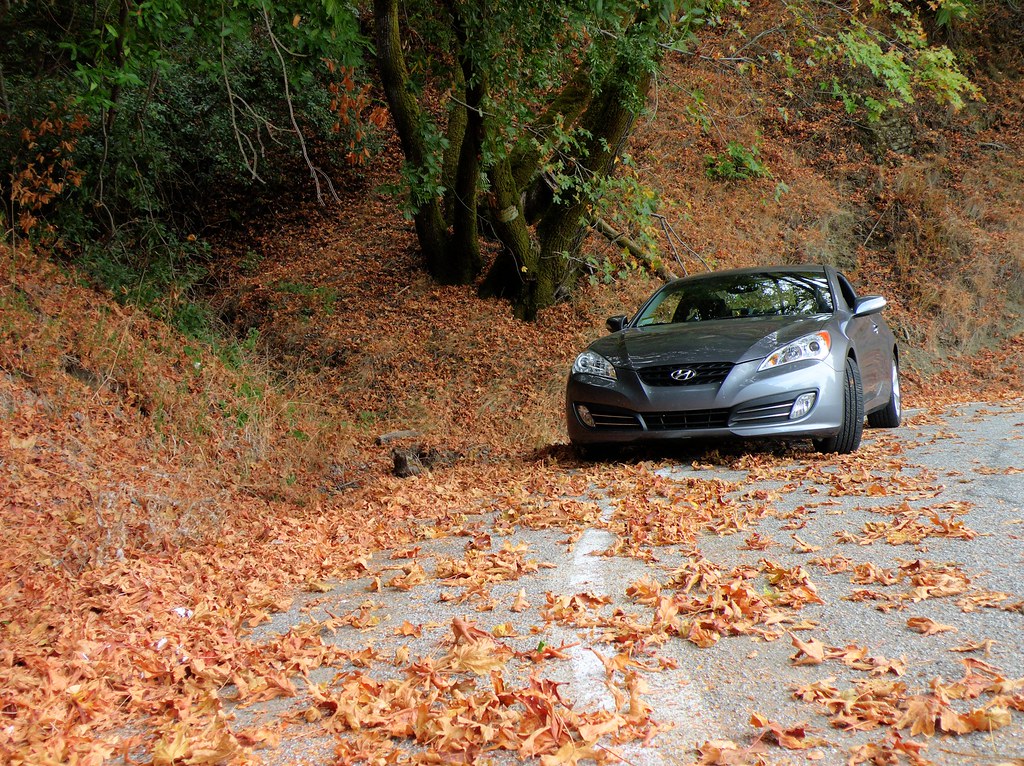


Accordingly, the Genesis Coupe is an impressive first attempt at a sports coupe from Hyundai. The styling is unique and attractive, the engine has enough power to dish out an adrenaline rush and the handling and braking are phenomenal. With pricing sitting just below $25,000 the Genesis Coupe gives buyers some serious incentive to choose Hyundai over other makers. The Genesis Coupe is a purpose built sports car with some serious appeal and performance to match, just don't expect any of the Genesis Sedan's luxury or comfort and you'll be one happy driver.

Saturday, September 1, 2012

The Mazda 5: A Gift from Japan to New Parents Everywhere


You might be interested in this article if...
-         You've just had some kids and you need a car to move them around in but are reluctant to drive a minivan
-         You need a versatile vehicle because you often accommodate guests or transport lots of cargo
-         You’re environmentally conscious and want an MPV that has best in class fuel efficiency

Once in a while an automaker does something right, so right that it’s almost undeniable, and although it isn’t the first time that Mazda has done something like this, the Mazda 5 deserves some love in particular especially since it's moving into a second generation. It’s a game changer for the North American market, and up until the very recent release of the Chevrolet Orlando and the soon to be released to North America Ford C-Max the Mazda 5 had gone completely unchallenged in its unique “small” minivan class.

First thing’s first though, we need a little historical context. Minivans weren’t always as large as they are now. They have only ballooned in size because the market wanted larger vehicles, not because everyone actually needed more space or seating, they just wanted it, and smaller minivans died off. However, because Japan wasn’t affected by this market trend small but remarkably space efficient vehicles are common. In addition to its usual small vehicles, Japan also has teensy tiny vehicles called Kei cars that really are the pinnacle of space management, efficiency, and affordability. The Japanese get all the cool stuff!


It's easy to see how the Mazda 5 feels like a compact hatch than a minivan

Still, in the 2005 model year Mazda needed to unify its entire line up under the zoom-zoom slogan, and took the chance to tap the dormant “small” minivan demographic by replacing its poky MPV with the compact and sporty 5.  Mazda classifies the 5 as a station wagon and sometimes as a Multi Activity Vehicle, and it actually sits on the same platform as the 3, but the public took one look at its three rows of seats and shouted “MINIVAN!” Whatever you call it, the 5 is remarkable. Offering the utility of a minivan with the sporty efficiency of a compact hatchback, the 5 offered new families the option to drive a minivan that was fun, stylish, and surprisingly affordable.


When it comes to the minivan, everyone agrees that they can be a little too boring, but the Mazda 5 is far from it. Because it’s based on the Mazda 3, the 5 is amazingly manoeuvrable compared to other minivans, and could actually be described as fun. On the road, the 5 drives like a sport compact more than a minivan, and the standard manual transmission (5MT ‘05-’11 and 6MT ’12) is wicked fun to shift through on acceleration or through some curves. The shifter is integrated into the center console which almost makes the driver feel like he’s in rally car. Although some have complained that the 2.3L Inline 4 needs more the 153hp and 148lb ft to satisfy, the new generation’s 2.5L Inline 4 with 157hp and 163lb ft provides the power at low rpms for passing and max hp at 6500rpm for an exhilarating ride. But what’s power without control? The 5 grips the road like a pro thanks to a fully independent suspension, and can also pull a 10.6m turning circle. Steering is electric/hydraulic R&P which is responsive at any speed and provides good feedback. Though the 5 is tall for its size it feels planted and stable, and it only gets better in the second generation with standard stability control and traction control. Still, the 5 isn’t a sports car and its zoom-zoom DNA is just a bonus.

At its core the Mazda 5 is an MPV (Multi-Purpose Vehicle) and this is where it really shines above the rest. Like many of the cars popular in Japan the 5 was engineered to be small on the outside and as large as possible on the inside without sacrificing structural integrity. And compared to other North American vehicles, the 5 is a breakthrough in space management. Being only 125mm longer than the Mazda 3, the 5 holds an impressive three rows of seating and up to 857L of cargo space, including a spare tire, with the seats folded nice and flat. Since Mazda only measures capacity up to the bottoms of their windows, you can imagine how much space is available. Still, the 5 can only seat 6 passengers using its Karakuri seating system; two in the front buckets, 2 in the second row captain’s chairs, and 2 in the third row’s 50/50 folding bench. In Japan, a seventh seat is included in the form of a jump seat that is inserted between the two captain’s chairs. See what I mean about the Japanese getting all the good stuff?

Another area where the 5 dominates is efficiency. Certainly less than the optimistic 29/41 city/hwy current 2.5L travels about 29 miles on a gallon in mixed driving conditions, which makes it class leader in efficiency. Still, because the 5 is offered with a manual transmission that number can change based on driving style and the optional trip computer can display both average economy and instant economy to help improve mileage.

One of the most tempting points of the Mazda5 is its price tag. With the base 2012 model costing only $21,795 and GT model costing $24,395 the 5 undercuts most every minivan excluding the Dodge Caravan. The base trim comes with good standard equipment for its price and in ’12 included, 16” alloys, keyless entry, AM/FM/CD/MP3 with four speakers, power windows, power locks, power mirrors, and A/C with automatic climate controls. The GT model adds 17” alloys, fog lights, sporty exterior styling, heated power mirrors, LED taillights, Side marker lights, 6 speaker audio system, Bluetooth, leather wrapped steering wheel and shift knob, cruise, and has a luxury package that consists of a power moon roof and leather seats.

On the outside the 5 has a unique shape, and looks something like a long hatchback, a tall wagon, or a short minivan. Rear sliding doors set it apart from anything that even comes close its shape and size, and also add huge practicality for loading passengers, or cargo. These doors are great for tight parking too, and you’ll never have to worry about your children opening their doors into adjacent cars. For those that opt for the GT trim the sliding doors have an easy close feature that pulls the door closed at the last few inches so that you’ll never need to slam your doors shut. The styling for the new ’12 model clearly uses Mazda’s flowing Nagare design which gives the illusion of motion inspired by natural flowing lines. Nevertheless, some enthusiast feel that the effect is over the top and that one day those smooth lines will remind drivers more of wrinkles than anything else. Furthermore, many casual drivers would have preferred the first generation’s vertical taillights to the conventional ones on the second generation.


Vertical tail lights are easier to spot by other drivers than horizontal ones


Once you’re inside the 5 the first thing you notice is that the dash and center console look more refined than one would expect in a $21 vehicle. The driver will be especially happy with the attractive three spoke tilt/telescoping steering wheel with integrated audio controls, and the shifter sprouting from the center console that’s WRC chic. Moreover, with adjustable height and lumbar support the driver can get very comfortable behind the wheel. Granted the interior materials are lower quality than others the interior design is very dynamic. The second row captain’s chairs have hidden storage compartments and a fold out tray with cup holders for rear occupants. It’s also surprising that power windows are standard in the small sliding doors of the 5, and will no doubt come in handy for those in the third row. Presently, the only real problems with the interior are the rough and noisy ride, and lack of room in the third row for adults, but the NVH (Noise Vibration Harshness) problems have been fixed for ’12.

When it comes to your family, safety is important, and although there are certainly safer alternatives to the 5, Mazda didn’t skimp on the features you need. All four wheels are ABS, and EBD equipped and come wrapped in 205/50R17 rubber to help grip the road. Next, stability control and traction control help keep the driver in control when the car would usually slide off the road. Mazda also pays attention to the basics, making sure all six seats have active head restraints, three point pretensioned seat belts, and ISOFIX child safety seat anchors for the second row. Lastly, Mazda tops it off with the usual 6 airbags (front, side, and curtain) with the curtain airbags protecting the second and third row occupants from side impacts.

On the whole, the Mazda 5 is a great choice for young families that are looking for a versatile car, and as a matter of fact, the 5 won AJAC’s best new family MPV in 2006. The interior is more versatile than the Ford C-Max and enough to accommodate most any situation. Exterior styling is top notch, the new engine is peppy and efficient, and although the ride can be a bit rough it is also the most fun you’ll ever have in a minivan, and certainly has more zoom-zoom than a Chevy Orlando. Most North American car manufacturers were willing to compromise in order to sell their minivans, only giving us what we wanted, yet Mazda had the guts to give us what needed. Honestly, it’s true, the Japanese get all the cool stuff, but I'm sincerely grateful that they chose to share some of it with us. 


Saturday, August 25, 2012

Honda CR-Z: A Different Kind of Hybrid


You might be interested in this article if...
-         You’re a sports enthusiast that needs a cheap, reliable sports car that won’t destroy the o-zone every time you drive spiritedly
-         You’re looking for a unique car that offers a blend of econ, eco, and sport that is 100% new to the market
-         You own an original CRX or first gen. Insight and want a fresh from the factory model that shares their traits

While Honda has always been one of the more “grown-up” automakers, many of us are wondering when their line up will see anything wild or daring again. The S2000, Prelude, Acura Integra, NSX and RSX have all bitten the dust leaving only the Civic Si and Honda’s line of motorcycles to defend its sporty heritage.

Plenty of us remember staring out the window of our family sedans at the Hondas that graced the roads in the 90s. The radical designs, new technology, engineering and performance that Honda had pushing into their vehicles made them shine above other makes. They were Hondas, and one day we were all going to own one just as awesome, radical, and fast as those that passed us by on the highway every day.

And that’s true to some degree; most of us – especially in Canada – drive Hondas. Yet it isn’t for the same reasons we wanted to as children. It’s actually because their responsible, affordable, practical, and reliable. We bought them because as we matured so did Honda, and our priorities both changed. But despite having few bad things to say about such a value for money brand that satisfies nearly everyone, Honda does leave a few of us wanting some of the old flare and passion back. We know it’s still there under the suit and tie; the cool Honda never actually left us. It still wears the same old sunglasses while cruising the strip after a hard day’s work.

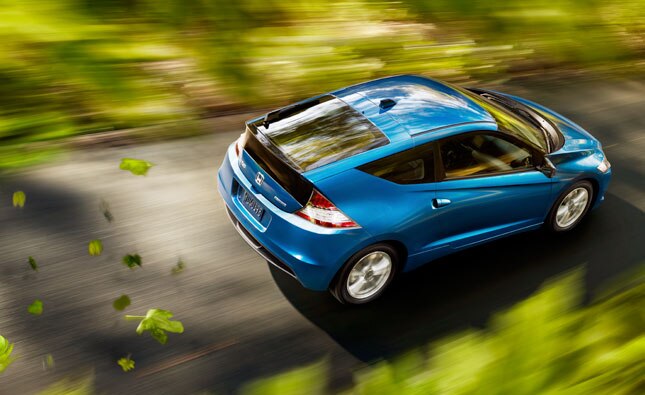
The CR-Z is Honda’s all new sporty car, and although it may not be the S2000 we’ve been hoping for, it certainly is a fantastic start. With the design being inspired by both past and present legends like the CRX, first generation Insight, Lotus Elise, and Mini Cooper, the CR-Z is very ambitious. The two door hatchback FF was created with some of Honda’s common goals in mind: maintaining sporty performance while also being efficient and inexpensive. But unlike other sporty Hondas of the 90s this one comes with a twist; it’s a hybrid.


Honda's CR-Z Development Video


We know what you’re thinking, “A sporty hybrid? Isn’t that an oxymoron?” The answer is something you’d expect from Honda’s modern innovation: Not anymore. Since its debut at the Tokyo motor show in ’07 as a concept the CR-Z has made as many promises to the public as a campaigning politician. Besides already promising to be sporty, efficient and inexpensive, the CR-Z had also promised to be a low emissions vehicle, and project leader Norio Tomobe believes that the CR-Z will truly be a guilt free sports car for the environmentally conscious. This is a lot to live up to, but the little hatchback actually delivered!

The CR-Z is currently the only manual transmission hybrid on the market in North America thanks to Honda’s IMA (Integrated Motor Assist) hybrid technology, which unlike Toyota’s Synergy Drive can mate to any type of transmission. With an impressive 6 speed manual transmission, Honda demonstrates it isn’t joking about the CR-Z’s sporty intent, and the unique blend of sport, eco, and econ have made the coupe rightfully attractive to buyers. Indeed, in the first month of production the Japanese Domestic Market placed over 10,000 orders for the CR-Z – that’s three times what Honda had expected. This instant success of the CR-Z within the JDM is reminiscent of the NSX.


Under the hood sits a 1.5L i-VTEC SOHC I4 gas engine dubbed LEA by the engineering team. Although the displacement is smaller than most engines, Honda rips 111hp and 106lb ft out of it alone and when coupled with its electric motor produces 122hp and 128lb ft. Because the motor allows for maximum torque from as little as 1000-1500rpm the CR-Z is quick off the line and tops out its hp at 6000rpm which creates a fairly wide power band. Although Honda only claims a modest 10.5 second 0-100km/h time, Inside line and Motor Trend beg to differ with 8.8s and 8.3s respectively, and the CR-Z continues to a top speed of  200km/h (125m/h).

Unlike other hybrids that claim they drive like a normal car, the CR-Z’s 6 speed overdrive manual transmission and satisfying exhaust note really pull it off. The tachometer even comes with a sporty indicator light that tells you when to change gears. The illusion is quite complete until you stop for a red and your engine turns off. Still, despite the Nickel Hydride battery powered motor assisting the efficient 1.5L engine, and ample torque for driving in higher gears for better mileage (the engine doesn’t even struggle in 6th gear at 50km/h), the CR-Z only pulls off an unimpressive 31/37 city/hwy. Granted this mileage is shamed by the CR-X HF’s 41/50 city/hwy, the CR-Z has lower emissions than any CR-X could ever dream of. CARB (California Air Resource Board) has actually created the AT-PZEV (Alternative Technology – Partial Zero Emissions Vehicle) category for its impressive, yet not quite zero, emissions. The original Insight boasted a slightly dirtier Super Ultra Low Emissions Vehicle classification.

A first Generation Honda Insight was both an extremely fuel efficient two-seater as well as a super ultra low emission vehicle

Although, the 6MT is best for most, if you’ve never learned how to drive stick and don’t plan to, or if you feel like defeating the purpose of the sporty hybrid altogether you can opt for the $800 CVT with paddle shifters which brings the mileage up to 35/39. And if you think you’d like to try paddle shifters because they sound super-sport-tastic, well consider that CVTs don’t actually have gears but only seven programmable ratios for their single gear. Stick with the 6MT though, and you’ll have no problem getting the most out of your hp.  

Some similar vehicles, like the Honda Insight, have both a normal and econ mode for more efficient driving. Other sports models offer a normal and sport mode to maximize the driving experience. The CR-Z, however, uses all three. This gives the CR-Z versatile engine settings that allow the car to reflect the driver’s style. If cars like the Civic, Corolla, 3, and other versatile models included options like these that allowed drivers to easily change the settings of their cars to achieve either higher efficiency or performance they would appeal to an even larger demographic. Drivers that become interested in sports racing would be able to taste it with their current model, and drivers that become environmentally conscious can start doing their part from their current model.

Whereas some dragsters will rely heavily on hp to create an exciting ride, the CR-Z is much more like a Miata in that superior handling keeps it fun to drive even with lower hp. Still, with the CR-Z sporting a slightly tuned suspension setup sourced from the base – yet still tossable – Honda Fit, numb steering feel from the EPS (Electronic Power assisted Steering), and with a less than perfect weight distribution, it certainly is a shock to hear it was inspired by the Lotus Elise. On a brighter note, the ventilated front, and solid rear disc brakes stop the car with authority with help from standard ABS, EBD, and Brake Assist. Coupled this with VSA (Vehicle Stability Assist) and Traction Control and the CR-Z actually has some pretty decent active safety features.

The CR-Z is more fun than it looks with an appealing exhaust note

Speaking of safety features, the CR-Z is actually very protective for a sporty car – but what else would you expect from grown-up Honda? In addition to the usual safety features like the standard three point pre tensioned seat belts, active head restraints, and the usual six airbags (Front, side, and curtain), Honda has built a revolutionary feature into the body structure. As with all Hondas being sold on the market now, the CR-Z comes standard with an ACE (Advanced Compatible Engineering) body design. What this means that even though the CR-Z is smaller and lighter than an SUV, if one of the brutes collides with it the front frame design will still protect occupants effectively despite the difference in height and weight by making the two vehicles more “compatible”. This great design allows more people to consider buying smaller cars despite the illusion that SUVs are safer just because they are bigger.

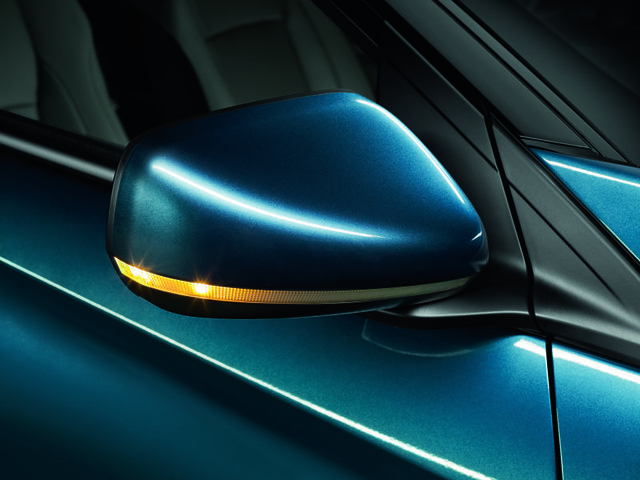
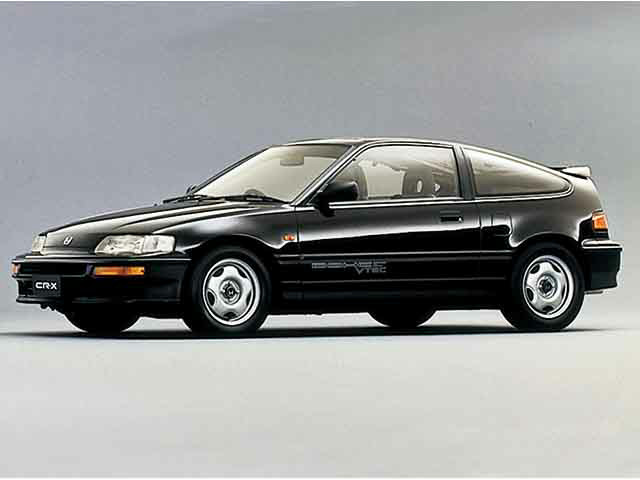
CR-Z stands for “Compact Renaissance Zero” which reflects the designer’s goals to rework the exterior from the ground up focusing more on fundamentals. Although a futuristic appearance was the idea, the overall shape reflects the CR-Z’s predecessor the CR-X. From the outside it’s easy to spot the resemblance between the two. Both are two-seaters, hatchbacks, and both share the same vertical rear deck windows to create more rear visibility. At the same time, if the two were side by side, one can see their styling is remarkably different. Where the CR-Z has flowing lines that create the illusion of motion, the CR-X is boxy yet admirably pragmatic and stoic in its design. One of my favourite touches on the exterior is the standard heated folding power mirrors with integrated turn signals. That’s literally everything you can put into an exterior mirror save an espresso machine!


The CR-Z's mirrors have everything you could ask for


After you use the keyless entry to hop inside, the CR-Z continues to impress with its style. The interior honestly looks futuristic, from the multi layered and almost 3D driver’s display to the contrasting white and piano black materials trimmed in chrome, Honda successfully achieves a future chic motif. Honda has always had a good reputation for quality interiors and the CR-Z is one of their best. The cabin is extremely spacious and offers ample room for two, and there is a whopping 711L of cargo space in the back and a space saving spare under the hatch’s floor. Some of this cargo space comes from the removal of unusable rear seats on NA models. At first glance it still seems to have really uncomfortable rear seats sans any cushioning, but those are actually small storage compartments that allow personal objects to be concealed from prying eyes.

These are unusable seats in the UK and Japan

The interior is configured around the driver. Honda made an effort to put everything within natural reach from the driver’s seat. The whole dash and all the controls are tilted slightly towards the driver - which is exactly how it should be - and audio/cruise controls are fitted into the steering wheel. Furthermore, finding a good driving position is easy with the height adjustable driver’s seat and tilt/telescopic steering wheel. In order to help keep the driver’s attention on the road Honda includes automatic climate control and SVC (Speed sensitive Volume Control) standard. The one element that doesn’t impress is the poor rear visibility thanks to huge c-pillars and a crossbeam that sits on top of the rear vertical deck.

The interior is actually very quiet and aside from the sporty yet artificial exhaust note on hard acceleration, the NVH (Noise Vibration and Harshness) is very good. The CR-Z’s quiet interior is great for enjoying its standard 360 watt 7 speaker audio system with CD/AM/FM and aux input jack. The standard Bluetooth 2.0 hands free calling feature also benefits from the relatively quiet ride.

Meanwhile, on this side of the pacific, after the production CR-Z debuted at the 2010 North American International Auto Show in Detroit and went on sale in August it only saw minor success in North America. Despite honours like, Most efficient two-seater of 2011 from NRC, Green Vehicle of the year from auto123.com, Japanese 2010-11 car of the year, Green car of the year from Top Gear UK, and Eco Gadget of the year from Stuff Magazine, the CR-Z just didn’t resonate well with the North American people.

Review from Stuff Magazine

Many North American enthusiasts feel that the CR-Z isn’t a proper successor to the CR-X because the CR-Z had to make sacrifices for safety features that compromised its performance and economy making it less fun than the CR-X Si and less efficient that the CR-X HF. Another issue stemmed from the CR-Z’s price. Because the Yen has gotten much stronger in recent years, it is difficult for Japanese manufactures, who are obligated to keep much of their labour inside Japan, to keep prices down. Although Honda does an excellent job at continuing to make great value cars, makers like Hyundai and Kia are muscling into their demographic because their currency is much weaker and their employees aren’t as well cared for. Furthermore, despite being the cheapest hybrid on the market – $19,950 in the US and $23,490 in Canada - many are sincerely pissed that it doesn’t get enough MPG to qualify for a government tax incentive. On the whole many enthusiasts think that Honda has shrunken its demographic by hedging its priorities too far between sport and eco, and by not having focused strongly on either it will fail to catch any attention in NA.

Granted the CR-Z isn’t as efficient as other hybrids, or as sporty as a Miata, the CR-Z has done something that can’t be downplayed; its design has pushed into the future of the sport compact. Although the CR-Z wasn’t intended as a sports car with a hybrid engine as much as it was a hybrid with sporty features, it really is breaking new ground within the industry. In the future all sports cars will be hybrids to meet emissions and efficiency standards before moving away from gasoline altogether, and while other manufacturers are still trying to exploit current trends by engineering sports cars that are more sporty or economic, Honda has shown its adult side again by thinking ahead and looking into the future for opportunity. 


Photos provided by google images, Honda.ca, and photographer Soul Synchro.
Soul Synchro is an auto enthusiast with a photographer's eye. He hosts a myriad of great photo's on his flickr account that are all worth viewing if you're interested in beautiful autos. Check him out http://www.flickr.com/photos/42018311@N07.

Saturday, August 4, 2012

FT-86: The Return of a Legend


You might be interested in this article if...
1.  You are a sports car enthusiast without a lot of money
2.    You are a fan of the legendary street racing AE-86
3.   You love the purpose build racing design of the MX-5 Miata, but find coupes more appealing

Ever look back on cars from 20+ years ago and wonder, “why don’t they make something like that now”? Many of the cars from the past had unique appeal that just seemed to slip away into history, never to return to the market. The Honda CR-X Si illustrates this well as it disappeared from Honda’s line up, and has only been replaced in spirit by the CR-X inspired Hyundai Veloster. The British Roadster of the 1960s illustrates this phenomenon as well, disappearing from the market in spite of desperate outcries from enthusiasts. However, unlike the CR-X, the British Roadster would be singlehandedly resurrected by the MX-5 Miata 30 years later, and has taken a place in automobile history since. We are about to witness another second coming. The second coming of a car that is perhaps more legendary and more notorious than either the CR-X or the British Roadster, a car that changed the face of both street and track racing in the 1980s – the 1986 Toyota Corolla, aka the AE-86.


The original street racing machine

Lately Toyota has been dreaming about the good old days before Scion, where sports cars didn’t require impressive specs or a massive MSRPs. When sports cars were simpler and racing was about intuition and the feel of your tires holding tight to the road while you tackled corners at the track or on a mountain pass. But Toyota didn’t have the space or manpower to make this dream possible, and so it formed a promising alliance with Subaru to get the job done. Subaru would handle engineering and manufacture the car out of its plant in Gunma Japan, while Toyota would design the car and fund the operation.

The design was inspired by the AE-86 and retains many of its traits, including rear seating, a hatchback, and an FR drive layout. In addition, Toyota had 3 very specific goals to meet with the design: Firstly, it needed to be light weight and efficient. Second, handling ability needed to be maximized while keeping the car affordable. Lastly, it needed to carry 4 people and at least a set of golf clubs. Toyota would name its new sports coupe the FT-86 (FT after Toyota’s pure sport hybrid FT-HS concept, and 86 after the AE-86).


The FT-HS pure sport hybrid concept

The FT-86 will be the world’s first coupe to carry a boxer engine, and the Subaru sourced 2.0L boxer will make 200hp (That’s 100hp/L!) and 151 lb-ft of torque. The FT-86 will also boast a 0-60 time of just seven seconds. And because the 86 only weighs 2662 lb it has a power ratio of 13.31lb/hp, which is even better than the Miata’s 14.5lb/hp. Furthermore, thanks to Toyota’s dual port direct injection technology the boxer redlines at 7500 rpm and boasts 29.17 MPG on premium unleaded.

Subaru Sourced 2.0L Boxer

All that power is channelled through a close ratio 6 speed manual transmission that shifts with precise feeling short throws. An automatic dual clutch transmission is also available for those that want it. The shift points are well timed, smooth and seamless. For those that want more control there are paddle shifters that allow manual gear shifts. In addition to the auto and manual drive modes, a semi-manual mode allows drivers to downshift for corners before returning to auto mode.

The Toyobaru alliance is really aiming to change the world of sports cars, and has been diligent in producing an affordable, purpose built enthusiast’s car that meets all its initial goals. Indeed, Toyota’s Chief engineer Tetsuya Tada said that the FT-86 was meant to be as affordable as possible so enthusiasts could actually buy the car, and that compromises would be necessary. Nevertheless, Toyobaru has found revolutionary ways to maximize value for money with clever engineering. The 86 was designed with a 53/47 front/rear weight distribution and boasts the lowest center of gravity of any production vehicle. This was achieved by capitalizing on the flat shape of the boxer engine, and by placing the engine very low and closer to the center of the car. The engine actually sits at about knee height from the driver, having its center of gravity only 17.7 inches above the ground puts it 1 inch lower than the Porsche Cayman’s! However, this also means the Subaru model won’t have room for AWD.  Next, the 86 uses light 17 inch alloys wrapped in 215/45R17 rubber which reduces unsprung weight and provides more precise handling compared to other less practical, vanity inspired wheel and corresponding elastic bands. The 86 also comes standard with a Torsen LSD to help it push out of corners even faster. To keep the price down, conventional Macpherson front struts and a double wishbone rear suspension systems were used. All this equipment culminates in exquisite handling that has even been compared to the agility of the Mazda MX-5 by many automotive journalists and magazines like Auto Car.


Spy image of Ft-86 testing at the Nurburgring

The premiss for the FT-86 is actually very similar to the Miata’s; if they had sprung for materials and components that would have really optimised the FT-86’s potential it would have been too heavy and too expensive.  The car is further devoid of most driving aids, excluding Electronic Stability Control, which is required by law. A lot like the Miata, the FT-86 relies less on computers and puts the driver back in control of the action.

While on the track automotive journalists describe the 86’s cornering as firmly planted with slight understeer. Because of the balanced tire size, the 86 oozes from between states of traction at its limit and provides ample notice before control is lost. The coupe is very tame despite its RWD and 200 hp. However, once the car hits straighter roads the driver may find himself wishing for an extra 100 hp.

Although Toyobaru didn’t necessarily need to provide sleek styling in their pragmatic coupe, they certainly did. This car looks so good, it’s boarder line pornographic! Its lines are flowing yet disciplined and focused. The coupe’s stance is aggressive but refined and svelte. Everything from the curves in the b-pillarless doors to the extremely well defined, and handsome LED trimmed head, and tail lights looks like they were planned meticulously. No doubt about it, the FT-86 has defined a style all its own and looks absolutely enchanting in black.


Photo from the Geneva Motor Show

But besides its great looks, the design was deliberate and practical. Visibility out the back window is better than one would expect and the overall Coefficient of Drag is only 0.27! To put that into perspective, the Mazda RX-8 has a Coefficient of 0.3.


RX-8, left, and FT-86, right

The good looks don’t stop there though. Although the interior of the FT-86 is sparse on fluffy features and soft touch surfaces, it is driver oriented. Everything from the position of the gages in the cluster and supportive racing styled seats to the position of the shifter and handbrake make driving the FT-86 feel natural and harmonious. Everything the driver touches, save the alloy pedals and fabric seat, is leather wrapped. The steering wheel is tilt and telescopic, and for the most hardcore racers that don’t have a second to look away from the road, automatic climate control. There is even a shift light on the rev counter!

Scanned page from a Toyota Modellista catalogue

In spite of its good looks and performance, the FT-86 isn’t as impractical as one would think. Despite being only 220mm longer than a Miata, there is seating for 4 if you’re willing to squeeze into the backseats. There is also 10 cubic ft of cargo space under the hatch that can be increased by folding the one piece rear seats. And a space saving spare is tucked under the hatch floor. Finally, the coupe doesn’t skimp on safety equipment either and comes standard with VSC, front driver and passenger airbags, and side and rear curtain airbags.

Concepts have been around motor shows for over 2 years now, but the production version will make its debut at the Tokyo Motor Show in December. The same model will be available in spring of the 2012 model year and have an MSRP of about $25k. Toyobaru’s sport coupe will be sold in the entry level sports category and compete with models like the Civic Si, Scion tC, and VW GTI.

Rumour has it that a turbo model will be available on the model year following the initial release of the FT-86. Moreover, Subaru’s sibling BRZ (Boxer, RWD, Zenith) model has been designed to accept a convertible top, and an extended wheelbase that might allow a 4 door model. And although these options would satisfy many enthusiasts from North America, Toyobaru has confirmed nothing.

You can learn more about the 86 by checking out the links below, or join the hype and be the first to read news about the FT-86 by signing up with its enthusiasts’ site ft86club.com.


Links to official/teaser videos :

Additional Reading:
*Specs Leaked from an official toyota training manual!* http://www.ft86club.com/forums/showthread.php?t=2096

Official Forums:

Saturday, July 28, 2012

Best First Sports Car : Miata MX-5


You might be interested in this article if...
- You've just gotten your licence and you're motivated to hit the track/street with a slick car that will show you just how much fun driving is
- You're contemplating making auto racing your hobby and you want a car with balanced specs that will help you find your style
- You are buying a second car, and this time you want something more fun than the last civic you bought

The Mazda MX-5 is a modern classic. Dotingly called the "Miata" (Old German for "reward"), anyone who knows anything about autos won't argue that the Miata is an impressive machine with a well earned place in the world of sports car racing. The perfectly balanced 50/50 front/rear, RWD's layout and styling from any one of its generations are easily recognised at a glance. A modern incarnation of the old 1960s small British roadster formula, the Miata is in fact the single reason why the roadster style sports car is so popular today.

The Lotus Elan Roadster's body design heavily influenced the Miata's


Debuting at the Chicago Auto show in 1989, the Mazda MX-5 would take the world by storm, initially selling more models than production could match, and has become the best selling convertible sports car in history. Over 900,000 MX-5s have been sold worldwide since productions started. This is for good reason: the car is amazing. Anyone who has had the pleasure of owning a Miata would assure you that it was one of the best investments they've ever made, and many sports car enthusiasts are so satisfied with its performance that they stick with it indefinitely despite very appealing alternatives with higher specs.


There have been 3 generations of Miatas, the NA, NB, and NC. Each of them is a splendid example of engineering that brings performance, handling, a convertible roof, and an affordable price into a nimble 2 seater. The designers at Mazda had affordable purpose built sports performance at the forefront of their minds, and when they designed the Miata the result was a simple mechanical construction, short dimensions, light curb weight, and an engine layout that all offered as much performance as possible without breaching government safety regulations, or costing too much. Indeed, the Miata NA was only $18,590 and one of only three convertibles of the early 90s available for less than 20k. The other two were simply rag top versions of the chevrolet metro/pontiac firefly and weren't really competing with the Miata as they only pumped out 55hp a piece.


NA generation Miata with hard top roof equipped

The first generation of Miata is easily recognised by its unique pop-up head lights, which would be replaced by fixed head lights in the NB and NC models. The NA was actually quite sparse on comfort and was as performance focused as the Lotus Elan that inspired the body styling. There was no A/C, no power windows or power mirrors, no power steering, and not even a radio or stereo! Only higher level trims offered those luxuries, but all Miatas from base trim to top have always had the same purpose built racing heart and follow the Jinba Ittai ("Unity of Horse and Rider" or in this case Car and Driver) philosophy to create a unique and remarkable driving experience.

The original 1.6L in line 4 engine made a modest 116hp and 100 lb-ft of torque, but when coupled with the excellent suspension configuration and rigid but light monocoque body the roadster had all it needed to tear around corners at high speeds and pump out exhilaration in the twisties. One good turn deserves another and in the next few years Mazda would switch up to a 1.8L that produced a respectable 133hp and 109 lb-ft of torque. Both engines were sourced from the protege/323 of the time.

Monocopue - (Mono-coke) An auto body layout in which the entire body is joined into one solid unit to optimize vehicle rigidity. Also referred to as Unibody.

The next generation of Miata was prepared for '98 but was delayed and only appeared in the US and Canada by '99. This is the reason you will never finda '98 model year Miata. The NB had slight styling changes (sans pop-up lights) and was the worst selling of the three generations. This Miata was slightly heavier due to improved lateral rigidity to meet newer side impact crash test standards in the US and Canada, but compensated by upping the horse power to 140. In 1999 Mazda celebrated the 10th anniversary of the Miata with a special edition that included a slick 6 speed transmission that traded 0.1 seconds on the 0-60 time for and added 4km/h to top speed.  At the end of the NB generation Mazda introduced a MazdaSpeed version of the Miata in 2005 that came equipped with a 1.8L turbo that made and exciting 178hp. With an impressive 0-60 time of only 6.4 seconds and coupled with improved 17" alloys the MazdaSpeed model was a particularly capable track vehicle.


The current model year Miata was built for the 2006 model year and has a standard high performance 167hp, high revving (7000rpm redline) engine across all its trim levels so the base trim offers the same kick as the top of the line special edition - a true tribute to its demographic of enthusiasts. However, if one really wants to make full use of the Miata's racing potential, opting for a more expensive trim will get you some equipment that will  really make you smile, such as a 6 speed manual transmission, LSD and other suspension refinements. Whichever trim level you choose you'll still be driving a Miata, the world's most iconic roadster, and there isn't a thing on this car that isn't "zoom-zoom".


Some of the important changes that were made to the NC include an upgraded suspension system that substitutes the front/rear double wish bone configuration for a front double wish bone/rear multilink suspension that when coupled with the improved sport suspension, bilstein shocks, strut tower bars, front and rear stabilizer bars, LSD, and Dynamic Stability control (All of which are standard on the GS trim) the NC sees improved handling, and pulls 0.90g on the skid pad. Other improvements include greater customizability from options, exterior and interior colors, soft top, and a newly added power retractable hard top ($2,295 option on GS, standard on GT) that can automatically equip or stow the hard top in 12 seconds. When the hard top roof is equipped, the Miata takes a strikingly similar look to a coupĂ©.

Despite all these new options the Miata retains its slim weight at around 1,150kg. Furthermore, its dimensions are barely any different from the original NA and the Miata NC manages an impressive compact design:

Wheelbase = 2,330mm
Track(Fr/Rr) = 1,490/1,495mm
Length = 4,032mm
Width = 1,720mm
Height = 1,245
Ground Clearance = 118 mm

For the environmentally concerned sportsman, the Miata is one of the better choices for environmentally friendly racing. The 2012 model year Miata gets 21/28mpg city/highway and is only bested by 2 Audis, the Mini, and the new Hyundai Veloster. However, fuel costs will be rather high because high octane is the manufacturer recommended fuel.

Make no mistake, the Miata is a sportsman's car, and isn't for grocery runs or anyone with kids. It is also not a red light racing Mustang and prefers the dynamic conditions of a track over a simple straight stretch of road. The Miata is such a well designed racing machine that it stands in a class of its own. Literally, there are One Make/Model races specifically for the Miata called Miata spec races because few cars of similar specs can actually compete against a Miata.

Miata's racing in a one model event


For anyone who is serious about buying the Miata as a first car, or anyone who wants to plunge into the world of auto racing with a refined machine, but don't have the $28,995 to buy a new model, there is good news. Because the Miata has been the best selling roadster for the past 20 years there are plenty on the used market that are only a hair's width away from the performance of a brand new model.

J.D power and associates, and consumer reports both agree with me when I say that the Miata is an excellent used car. The quality control standards are as high as we have come to expect from Japanese auto manufacturers, and the British inspired 60s roadster look is still fresh and attractive today. Although other roadsters like the Saturn Sky, BMW Z4, and Pontiac Solstice will retain their value better over time, any one of the many special editions (some of which were turn key professional race ready machines) Mazda has produced of the Miata will only appreciate in value because many collectors see them as pieces of automotive history. But for everyone who can't find a LE this at least means the Miata you do buy will have a very agreeable sticker price.

Used 2004 MX-5 Speed being sold during a liquidation sale for $10,000 CAD or about 30% the cost of a new - equally well equipped - model

For more information on the Mazda Miata MX-5:
Miata online community website: http://www.miata.net/

MA5DA