
You might be interested in this article if...
- You’re a sports enthusiast that needs a cheap, reliable sports car that won’t destroy the o-zone every time you drive spiritedly
- You’re looking for a unique car that offers a blend of econ, eco, and sport that is 100% new to the market
- You own an original CRX or first gen. Insight and want a fresh from the factory model that shares their traits
While Honda has always been one of the more “grown-up” automakers, many of us are wondering when their line up will see anything wild or daring again. The S2000, Prelude, Acura Integra, NSX and RSX have all bitten the dust leaving only the Civic Si and Honda’s line of motorcycles to defend its sporty heritage.
Plenty of us remember staring out the window of our family sedans at the Hondas that graced the roads in the 90s. The radical designs, new technology, engineering and performance that Honda had pushing into their vehicles made them shine above other makes. They were Hondas, and one day we were all going to own one just as awesome, radical, and fast as those that passed us by on the highway every day.
And that’s true to some degree; most of us – especially in Canada – drive Hondas. Yet it isn’t for the same reasons we wanted to as children. It’s actually because their responsible, affordable, practical, and reliable. We bought them because as we matured so did Honda, and our priorities both changed. But despite having few bad things to say about such a value for money brand that satisfies nearly everyone, Honda does leave a few of us wanting some of the old flare and passion back. We know it’s still there under the suit and tie; the cool Honda never actually left us. It still wears the same old sunglasses while cruising the strip after a hard day’s work.
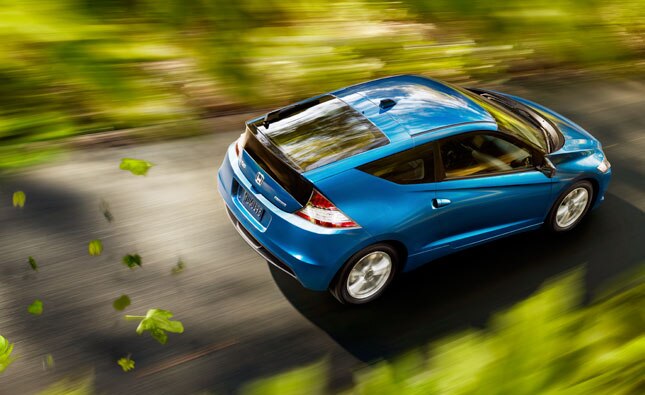
The CR-Z is Honda’s all new sporty car, and although it may not be the S2000 we’ve been hoping for, it certainly is a fantastic start. With the design being inspired by both past and present legends like the CRX, first generation Insight, Lotus Elise, and Mini Cooper, the CR-Z is very ambitious. The two door hatchback FF was created with some of Honda’s common goals in mind: maintaining sporty performance while also being efficient and inexpensive. But unlike other sporty Hondas of the 90s this one comes with a twist; it’s a hybrid.
Honda's CR-Z Development Video

 The CR-Z is currently the only manual transmission hybrid on the market in North America thanks to Honda’s IMA (Integrated Motor Assist) hybrid technology, which unlike Toyota’s Synergy Drive can mate to any type of transmission. With an impressive 6 speed manual transmission, Honda demonstrates it isn’t joking about the CR-Z’s sporty intent, and the unique blend of sport, eco, and econ have made the coupe rightfully attractive to buyers. Indeed, in the first month of production the Japanese Domestic Market placed over 10,000 orders for the CR-Z – that’s three times what Honda had expected. This instant success of the CR-Z within the JDM is reminiscent of the NSX.

Under the hood sits a 1.5L i-VTEC SOHC I4 gas engine dubbed LEA by the engineering team. Although the displacement is smaller than most engines, Honda rips 111hp and 106lb ft out of it alone and when coupled with its electric motor produces 122hp and 128lb ft. Because the motor allows for maximum torque from as little as 1000-1500rpm the CR-Z is quick off the line and tops out its hp at 6000rpm which creates a fairly wide power band. Although Honda only claims a modest 10.5 second 0-100km/h time, Inside line and Motor Trend beg to differ with 8.8s and 8.3s respectively, and the CR-Z continues to a top speed of 200km/h (125m/h).
Unlike other hybrids that claim they drive like a normal car, the CR-Z’s 6 speed overdrive manual transmission and satisfying exhaust note really pull it off. The tachometer even comes with a sporty indicator light that tells you when to change gears. The illusion is quite complete until you stop for a red and your engine turns off. Still, despite the Nickel Hydride battery powered motor assisting the efficient 1.5L engine, and ample torque for driving in higher gears for better mileage (the engine doesn’t even struggle in 6th gear at 50km/h), the CR-Z only pulls off an unimpressive 31/37 city/hwy. Granted this mileage is shamed by the CR-X HF’s 41/50 city/hwy, the CR-Z has lower emissions than any CR-X could ever dream of. CARB (California Air Resource Board) has actually created the AT-PZEV (Alternative Technology – Partial Zero Emissions Vehicle) category for its impressive, yet not quite zero, emissions. The original Insight boasted a slightly dirtier Super Ultra Low Emissions Vehicle classification.

A first Generation Honda Insight was both an extremely fuel efficient two-seater as well as a super ultra low emission vehicle
Although, the 6MT is best for most, if you’ve never learned how to drive stick and don’t plan to, or if you feel like defeating the purpose of the sporty hybrid altogether you can opt for the $800 CVT with paddle shifters which brings the mileage up to 35/39. And if you think you’d like to try paddle shifters because they sound super-sport-tastic, well consider that CVTs don’t actually have gears but only seven programmable ratios for their single gear. Stick with the 6MT though, and you’ll have no problem getting the most out of your hp.

Some similar vehicles, like the Honda Insight, have both a normal and econ mode for more efficient driving. Other sports models offer a normal and sport mode to maximize the driving experience. The CR-Z, however, uses all three. This gives the CR-Z versatile engine settings that allow the car to reflect the driver’s style. If cars like the Civic, Corolla, 3, and other versatile models included options like these that allowed drivers to easily change the settings of their cars to achieve either higher efficiency or performance they would appeal to an even larger demographic. Drivers that become interested in sports racing would be able to taste it with their current model, and drivers that become environmentally conscious can start doing their part from their current model.
Whereas some dragsters will rely heavily on hp to create an exciting ride, the CR-Z is much more like a Miata in that superior handling keeps it fun to drive even with lower hp. Still, with the CR-Z sporting a slightly tuned suspension setup sourced from the base – yet still tossable – Honda Fit, numb steering feel from the EPS (Electronic Power assisted Steering), and with a less than perfect weight distribution, it certainly is a shock to hear it was inspired by the Lotus Elise. On a brighter note, the ventilated front, and solid rear disc brakes stop the car with authority with help from standard ABS, EBD, and Brake Assist. Coupled this with VSA (Vehicle Stability Assist) and Traction Control and the CR-Z actually has some pretty decent active safety features.

The CR-Z is more fun than it looks with an appealing exhaust note

Speaking of safety features, the CR-Z is actually very protective for a sporty car – but what else would you expect from grown-up Honda? In addition to the usual safety features like the standard three point pre tensioned seat belts, active head restraints, and the usual six airbags (Front, side, and curtain), Honda has built a revolutionary feature into the body structure. As with all Hondas being sold on the market now, the CR-Z comes standard with an ACE (Advanced Compatible Engineering) body design. What this means that even though the CR-Z is smaller and lighter than an SUV, if one of the brutes collides with it the front frame design will still protect occupants effectively despite the difference in height and weight by making the two vehicles more “compatible”. This great design allows more people to consider buying smaller cars despite the illusion that SUVs are safer just because they are bigger.
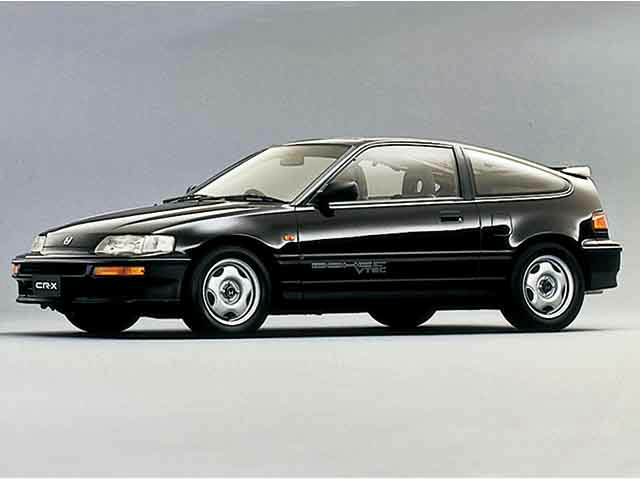
CR-Z stands for “Compact Renaissance Zero” which reflects the designer’s goals to rework the exterior from the ground up focusing more on fundamentals. Although a futuristic appearance was the idea, the overall shape reflects the CR-Z’s predecessor the CR-X. From the outside it’s easy to spot the resemblance between the two. Both are two-seaters, hatchbacks, and both share the same vertical rear deck windows to create more rear visibility. At the same time, if the two were side by side, one can see their styling is remarkably different. Where the CR-Z has flowing lines that create the illusion of motion, the CR-X is boxy yet admirably pragmatic and stoic in its design. One of my favourite touches on the exterior is the standard heated folding power mirrors with integrated turn signals. That’s literally everything you can put into an exterior mirror save an espresso machine!
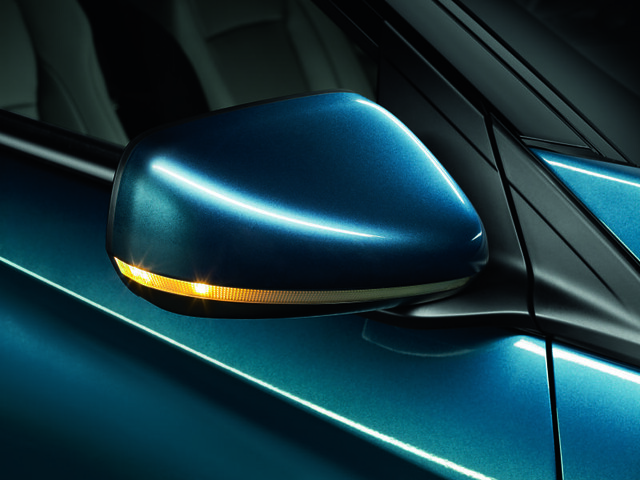
The CR-Z's mirrors have everything you could ask for

After you use the keyless entry to hop inside, the CR-Z continues to impress with its style. The interior honestly looks futuristic, from the multi layered and almost 3D driver’s display to the contrasting white and piano black materials trimmed in chrome, Honda successfully achieves a future chic motif. Honda has always had a good reputation for quality interiors and the CR-Z is one of their best. The cabin is extremely spacious and offers ample room for two, and there is a whopping 711L of cargo space in the back and a space saving spare under the hatch’s floor. Some of this cargo space comes from the removal of unusable rear seats on NA models. At first glance it still seems to have really uncomfortable rear seats sans any cushioning, but those are actually small storage compartments that allow personal objects to be concealed from prying eyes.

These are unusable seats in the UK and Japan

The interior is configured around the driver. Honda made an effort to put everything within natural reach from the driver’s seat. The whole dash and all the controls are tilted slightly towards the driver - which is exactly how it should be - and audio/cruise controls are fitted into the steering wheel. Furthermore, finding a good driving position is easy with the height adjustable driver’s seat and tilt/telescopic steering wheel. In order to help keep the driver’s attention on the road Honda includes automatic climate control and SVC (Speed sensitive Volume Control) standard. The one element that doesn’t impress is the poor rear visibility thanks to huge c-pillars and a crossbeam that sits on top of the rear vertical deck.
The interior is actually very quiet and aside from the sporty yet artificial exhaust note on hard acceleration, the NVH (Noise Vibration and Harshness) is very good. The CR-Z’s quiet interior is great for enjoying its standard 360 watt 7 speaker audio system with CD/AM/FM and aux input jack. The standard Bluetooth 2.0 hands free calling feature also benefits from the relatively quiet ride.
Meanwhile, on this side of the pacific, after the production CR-Z debuted at the 2010 North American International Auto Show in Detroit and went on sale in August it only saw minor success in North America. Despite honours like, Most efficient two-seater of 2011 from NRC, Green Vehicle of the year from auto123.com, Japanese 2010-11 car of the year, Green car of the year from Top Gear UK, and Eco Gadget of the year from Stuff Magazine, the CR-Z just didn’t resonate well with the North American people.
Review from Stuff Magazine
Granted the CR-Z isn’t as efficient as other hybrids, or as sporty as a Miata, the CR-Z has done something that can’t be downplayed; its design has pushed into the future of the sport compact. Although the CR-Z wasn’t intended as a sports car with a hybrid engine as much as it was a hybrid with sporty features, it really is breaking new ground within the industry. In the future all sports cars will be hybrids to meet emissions and efficiency standards before moving away from gasoline altogether, and while other manufacturers are still trying to exploit current trends by engineering sports cars that are more sporty or economic, Honda has shown its adult side again by thinking ahead and looking into the future for opportunity.
Photos provided by google images, Honda.ca, and photographer Soul Synchro.
Soul Synchro is an auto enthusiast with a photographer's eye. He hosts a myriad of great photo's on his flickr account that are all worth viewing if you're interested in beautiful autos. Check him out @ http://www.flickr.com/photos/42018311@N07.


