Showing posts with label Fuel efficient. Show all posts

Saturday, September 1, 2012

The Mazda 5: A Gift from Japan to New Parents Everywhere


You might be interested in this article if...
-         You've just had some kids and you need a car to move them around in but are reluctant to drive a minivan
-         You need a versatile vehicle because you often accommodate guests or transport lots of cargo
-         You’re environmentally conscious and want an MPV that has best in class fuel efficiency

Once in a while an automaker does something right, so right that it’s almost undeniable, and although it isn’t the first time that Mazda has done something like this, the Mazda 5 deserves some love in particular especially since it's moving into a second generation. It’s a game changer for the North American market, and up until the very recent release of the Chevrolet Orlando and the soon to be released to North America Ford C-Max the Mazda 5 had gone completely unchallenged in its unique “small” minivan class.

First thing’s first though, we need a little historical context. Minivans weren’t always as large as they are now. They have only ballooned in size because the market wanted larger vehicles, not because everyone actually needed more space or seating, they just wanted it, and smaller minivans died off. However, because Japan wasn’t affected by this market trend small but remarkably space efficient vehicles are common. In addition to its usual small vehicles, Japan also has teensy tiny vehicles called Kei cars that really are the pinnacle of space management, efficiency, and affordability. The Japanese get all the cool stuff!


It's easy to see how the Mazda 5 feels like a compact hatch than a minivan

Still, in the 2005 model year Mazda needed to unify its entire line up under the zoom-zoom slogan, and took the chance to tap the dormant “small” minivan demographic by replacing its poky MPV with the compact and sporty 5.  Mazda classifies the 5 as a station wagon and sometimes as a Multi Activity Vehicle, and it actually sits on the same platform as the 3, but the public took one look at its three rows of seats and shouted “MINIVAN!” Whatever you call it, the 5 is remarkable. Offering the utility of a minivan with the sporty efficiency of a compact hatchback, the 5 offered new families the option to drive a minivan that was fun, stylish, and surprisingly affordable.


When it comes to the minivan, everyone agrees that they can be a little too boring, but the Mazda 5 is far from it. Because it’s based on the Mazda 3, the 5 is amazingly manoeuvrable compared to other minivans, and could actually be described as fun. On the road, the 5 drives like a sport compact more than a minivan, and the standard manual transmission (5MT ‘05-’11 and 6MT ’12) is wicked fun to shift through on acceleration or through some curves. The shifter is integrated into the center console which almost makes the driver feel like he’s in rally car. Although some have complained that the 2.3L Inline 4 needs more the 153hp and 148lb ft to satisfy, the new generation’s 2.5L Inline 4 with 157hp and 163lb ft provides the power at low rpms for passing and max hp at 6500rpm for an exhilarating ride. But what’s power without control? The 5 grips the road like a pro thanks to a fully independent suspension, and can also pull a 10.6m turning circle. Steering is electric/hydraulic R&P which is responsive at any speed and provides good feedback. Though the 5 is tall for its size it feels planted and stable, and it only gets better in the second generation with standard stability control and traction control. Still, the 5 isn’t a sports car and its zoom-zoom DNA is just a bonus.

At its core the Mazda 5 is an MPV (Multi-Purpose Vehicle) and this is where it really shines above the rest. Like many of the cars popular in Japan the 5 was engineered to be small on the outside and as large as possible on the inside without sacrificing structural integrity. And compared to other North American vehicles, the 5 is a breakthrough in space management. Being only 125mm longer than the Mazda 3, the 5 holds an impressive three rows of seating and up to 857L of cargo space, including a spare tire, with the seats folded nice and flat. Since Mazda only measures capacity up to the bottoms of their windows, you can imagine how much space is available. Still, the 5 can only seat 6 passengers using its Karakuri seating system; two in the front buckets, 2 in the second row captain’s chairs, and 2 in the third row’s 50/50 folding bench. In Japan, a seventh seat is included in the form of a jump seat that is inserted between the two captain’s chairs. See what I mean about the Japanese getting all the good stuff?

Another area where the 5 dominates is efficiency. Certainly less than the optimistic 29/41 city/hwy current 2.5L travels about 29 miles on a gallon in mixed driving conditions, which makes it class leader in efficiency. Still, because the 5 is offered with a manual transmission that number can change based on driving style and the optional trip computer can display both average economy and instant economy to help improve mileage.

One of the most tempting points of the Mazda5 is its price tag. With the base 2012 model costing only $21,795 and GT model costing $24,395 the 5 undercuts most every minivan excluding the Dodge Caravan. The base trim comes with good standard equipment for its price and in ’12 included, 16” alloys, keyless entry, AM/FM/CD/MP3 with four speakers, power windows, power locks, power mirrors, and A/C with automatic climate controls. The GT model adds 17” alloys, fog lights, sporty exterior styling, heated power mirrors, LED taillights, Side marker lights, 6 speaker audio system, Bluetooth, leather wrapped steering wheel and shift knob, cruise, and has a luxury package that consists of a power moon roof and leather seats.

On the outside the 5 has a unique shape, and looks something like a long hatchback, a tall wagon, or a short minivan. Rear sliding doors set it apart from anything that even comes close its shape and size, and also add huge practicality for loading passengers, or cargo. These doors are great for tight parking too, and you’ll never have to worry about your children opening their doors into adjacent cars. For those that opt for the GT trim the sliding doors have an easy close feature that pulls the door closed at the last few inches so that you’ll never need to slam your doors shut. The styling for the new ’12 model clearly uses Mazda’s flowing Nagare design which gives the illusion of motion inspired by natural flowing lines. Nevertheless, some enthusiast feel that the effect is over the top and that one day those smooth lines will remind drivers more of wrinkles than anything else. Furthermore, many casual drivers would have preferred the first generation’s vertical taillights to the conventional ones on the second generation.


Vertical tail lights are easier to spot by other drivers than horizontal ones


Once you’re inside the 5 the first thing you notice is that the dash and center console look more refined than one would expect in a $21 vehicle. The driver will be especially happy with the attractive three spoke tilt/telescoping steering wheel with integrated audio controls, and the shifter sprouting from the center console that’s WRC chic. Moreover, with adjustable height and lumbar support the driver can get very comfortable behind the wheel. Granted the interior materials are lower quality than others the interior design is very dynamic. The second row captain’s chairs have hidden storage compartments and a fold out tray with cup holders for rear occupants. It’s also surprising that power windows are standard in the small sliding doors of the 5, and will no doubt come in handy for those in the third row. Presently, the only real problems with the interior are the rough and noisy ride, and lack of room in the third row for adults, but the NVH (Noise Vibration Harshness) problems have been fixed for ’12.

When it comes to your family, safety is important, and although there are certainly safer alternatives to the 5, Mazda didn’t skimp on the features you need. All four wheels are ABS, and EBD equipped and come wrapped in 205/50R17 rubber to help grip the road. Next, stability control and traction control help keep the driver in control when the car would usually slide off the road. Mazda also pays attention to the basics, making sure all six seats have active head restraints, three point pretensioned seat belts, and ISOFIX child safety seat anchors for the second row. Lastly, Mazda tops it off with the usual 6 airbags (front, side, and curtain) with the curtain airbags protecting the second and third row occupants from side impacts.

On the whole, the Mazda 5 is a great choice for young families that are looking for a versatile car, and as a matter of fact, the 5 won AJAC’s best new family MPV in 2006. The interior is more versatile than the Ford C-Max and enough to accommodate most any situation. Exterior styling is top notch, the new engine is peppy and efficient, and although the ride can be a bit rough it is also the most fun you’ll ever have in a minivan, and certainly has more zoom-zoom than a Chevy Orlando. Most North American car manufacturers were willing to compromise in order to sell their minivans, only giving us what we wanted, yet Mazda had the guts to give us what needed. Honestly, it’s true, the Japanese get all the cool stuff, but I'm sincerely grateful that they chose to share some of it with us. 


Saturday, August 25, 2012

Honda CR-Z: A Different Kind of Hybrid


You might be interested in this article if...
-         You’re a sports enthusiast that needs a cheap, reliable sports car that won’t destroy the o-zone every time you drive spiritedly
-         You’re looking for a unique car that offers a blend of econ, eco, and sport that is 100% new to the market
-         You own an original CRX or first gen. Insight and want a fresh from the factory model that shares their traits

While Honda has always been one of the more “grown-up” automakers, many of us are wondering when their line up will see anything wild or daring again. The S2000, Prelude, Acura Integra, NSX and RSX have all bitten the dust leaving only the Civic Si and Honda’s line of motorcycles to defend its sporty heritage.

Plenty of us remember staring out the window of our family sedans at the Hondas that graced the roads in the 90s. The radical designs, new technology, engineering and performance that Honda had pushing into their vehicles made them shine above other makes. They were Hondas, and one day we were all going to own one just as awesome, radical, and fast as those that passed us by on the highway every day.

And that’s true to some degree; most of us – especially in Canada – drive Hondas. Yet it isn’t for the same reasons we wanted to as children. It’s actually because their responsible, affordable, practical, and reliable. We bought them because as we matured so did Honda, and our priorities both changed. But despite having few bad things to say about such a value for money brand that satisfies nearly everyone, Honda does leave a few of us wanting some of the old flare and passion back. We know it’s still there under the suit and tie; the cool Honda never actually left us. It still wears the same old sunglasses while cruising the strip after a hard day’s work.

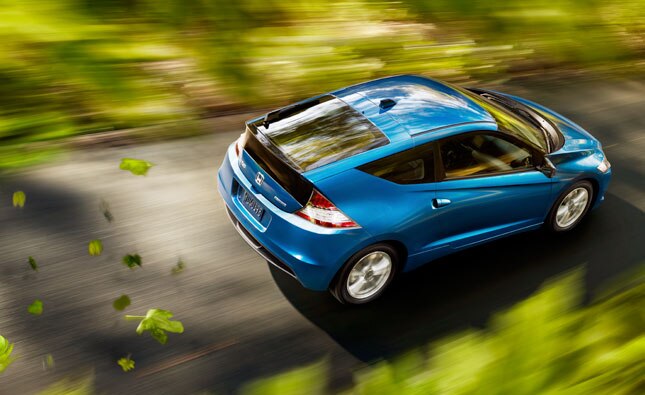
The CR-Z is Honda’s all new sporty car, and although it may not be the S2000 we’ve been hoping for, it certainly is a fantastic start. With the design being inspired by both past and present legends like the CRX, first generation Insight, Lotus Elise, and Mini Cooper, the CR-Z is very ambitious. The two door hatchback FF was created with some of Honda’s common goals in mind: maintaining sporty performance while also being efficient and inexpensive. But unlike other sporty Hondas of the 90s this one comes with a twist; it’s a hybrid.


Honda's CR-Z Development Video


We know what you’re thinking, “A sporty hybrid? Isn’t that an oxymoron?” The answer is something you’d expect from Honda’s modern innovation: Not anymore. Since its debut at the Tokyo motor show in ’07 as a concept the CR-Z has made as many promises to the public as a campaigning politician. Besides already promising to be sporty, efficient and inexpensive, the CR-Z had also promised to be a low emissions vehicle, and project leader Norio Tomobe believes that the CR-Z will truly be a guilt free sports car for the environmentally conscious. This is a lot to live up to, but the little hatchback actually delivered!

The CR-Z is currently the only manual transmission hybrid on the market in North America thanks to Honda’s IMA (Integrated Motor Assist) hybrid technology, which unlike Toyota’s Synergy Drive can mate to any type of transmission. With an impressive 6 speed manual transmission, Honda demonstrates it isn’t joking about the CR-Z’s sporty intent, and the unique blend of sport, eco, and econ have made the coupe rightfully attractive to buyers. Indeed, in the first month of production the Japanese Domestic Market placed over 10,000 orders for the CR-Z – that’s three times what Honda had expected. This instant success of the CR-Z within the JDM is reminiscent of the NSX.


Under the hood sits a 1.5L i-VTEC SOHC I4 gas engine dubbed LEA by the engineering team. Although the displacement is smaller than most engines, Honda rips 111hp and 106lb ft out of it alone and when coupled with its electric motor produces 122hp and 128lb ft. Because the motor allows for maximum torque from as little as 1000-1500rpm the CR-Z is quick off the line and tops out its hp at 6000rpm which creates a fairly wide power band. Although Honda only claims a modest 10.5 second 0-100km/h time, Inside line and Motor Trend beg to differ with 8.8s and 8.3s respectively, and the CR-Z continues to a top speed of  200km/h (125m/h).

Unlike other hybrids that claim they drive like a normal car, the CR-Z’s 6 speed overdrive manual transmission and satisfying exhaust note really pull it off. The tachometer even comes with a sporty indicator light that tells you when to change gears. The illusion is quite complete until you stop for a red and your engine turns off. Still, despite the Nickel Hydride battery powered motor assisting the efficient 1.5L engine, and ample torque for driving in higher gears for better mileage (the engine doesn’t even struggle in 6th gear at 50km/h), the CR-Z only pulls off an unimpressive 31/37 city/hwy. Granted this mileage is shamed by the CR-X HF’s 41/50 city/hwy, the CR-Z has lower emissions than any CR-X could ever dream of. CARB (California Air Resource Board) has actually created the AT-PZEV (Alternative Technology – Partial Zero Emissions Vehicle) category for its impressive, yet not quite zero, emissions. The original Insight boasted a slightly dirtier Super Ultra Low Emissions Vehicle classification.

A first Generation Honda Insight was both an extremely fuel efficient two-seater as well as a super ultra low emission vehicle

Although, the 6MT is best for most, if you’ve never learned how to drive stick and don’t plan to, or if you feel like defeating the purpose of the sporty hybrid altogether you can opt for the $800 CVT with paddle shifters which brings the mileage up to 35/39. And if you think you’d like to try paddle shifters because they sound super-sport-tastic, well consider that CVTs don’t actually have gears but only seven programmable ratios for their single gear. Stick with the 6MT though, and you’ll have no problem getting the most out of your hp.  

Some similar vehicles, like the Honda Insight, have both a normal and econ mode for more efficient driving. Other sports models offer a normal and sport mode to maximize the driving experience. The CR-Z, however, uses all three. This gives the CR-Z versatile engine settings that allow the car to reflect the driver’s style. If cars like the Civic, Corolla, 3, and other versatile models included options like these that allowed drivers to easily change the settings of their cars to achieve either higher efficiency or performance they would appeal to an even larger demographic. Drivers that become interested in sports racing would be able to taste it with their current model, and drivers that become environmentally conscious can start doing their part from their current model.

Whereas some dragsters will rely heavily on hp to create an exciting ride, the CR-Z is much more like a Miata in that superior handling keeps it fun to drive even with lower hp. Still, with the CR-Z sporting a slightly tuned suspension setup sourced from the base – yet still tossable – Honda Fit, numb steering feel from the EPS (Electronic Power assisted Steering), and with a less than perfect weight distribution, it certainly is a shock to hear it was inspired by the Lotus Elise. On a brighter note, the ventilated front, and solid rear disc brakes stop the car with authority with help from standard ABS, EBD, and Brake Assist. Coupled this with VSA (Vehicle Stability Assist) and Traction Control and the CR-Z actually has some pretty decent active safety features.

The CR-Z is more fun than it looks with an appealing exhaust note

Speaking of safety features, the CR-Z is actually very protective for a sporty car – but what else would you expect from grown-up Honda? In addition to the usual safety features like the standard three point pre tensioned seat belts, active head restraints, and the usual six airbags (Front, side, and curtain), Honda has built a revolutionary feature into the body structure. As with all Hondas being sold on the market now, the CR-Z comes standard with an ACE (Advanced Compatible Engineering) body design. What this means that even though the CR-Z is smaller and lighter than an SUV, if one of the brutes collides with it the front frame design will still protect occupants effectively despite the difference in height and weight by making the two vehicles more “compatible”. This great design allows more people to consider buying smaller cars despite the illusion that SUVs are safer just because they are bigger.

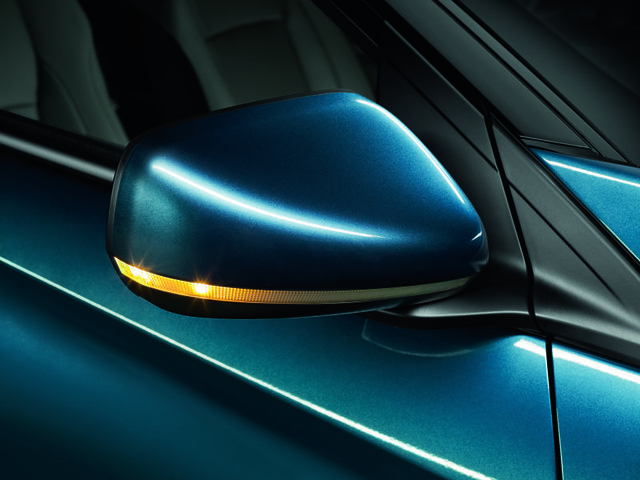
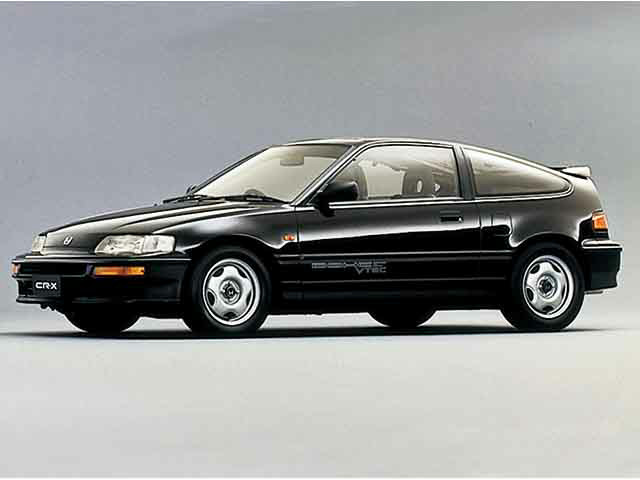
CR-Z stands for “Compact Renaissance Zero” which reflects the designer’s goals to rework the exterior from the ground up focusing more on fundamentals. Although a futuristic appearance was the idea, the overall shape reflects the CR-Z’s predecessor the CR-X. From the outside it’s easy to spot the resemblance between the two. Both are two-seaters, hatchbacks, and both share the same vertical rear deck windows to create more rear visibility. At the same time, if the two were side by side, one can see their styling is remarkably different. Where the CR-Z has flowing lines that create the illusion of motion, the CR-X is boxy yet admirably pragmatic and stoic in its design. One of my favourite touches on the exterior is the standard heated folding power mirrors with integrated turn signals. That’s literally everything you can put into an exterior mirror save an espresso machine!


The CR-Z's mirrors have everything you could ask for


After you use the keyless entry to hop inside, the CR-Z continues to impress with its style. The interior honestly looks futuristic, from the multi layered and almost 3D driver’s display to the contrasting white and piano black materials trimmed in chrome, Honda successfully achieves a future chic motif. Honda has always had a good reputation for quality interiors and the CR-Z is one of their best. The cabin is extremely spacious and offers ample room for two, and there is a whopping 711L of cargo space in the back and a space saving spare under the hatch’s floor. Some of this cargo space comes from the removal of unusable rear seats on NA models. At first glance it still seems to have really uncomfortable rear seats sans any cushioning, but those are actually small storage compartments that allow personal objects to be concealed from prying eyes.

These are unusable seats in the UK and Japan

The interior is configured around the driver. Honda made an effort to put everything within natural reach from the driver’s seat. The whole dash and all the controls are tilted slightly towards the driver - which is exactly how it should be - and audio/cruise controls are fitted into the steering wheel. Furthermore, finding a good driving position is easy with the height adjustable driver’s seat and tilt/telescopic steering wheel. In order to help keep the driver’s attention on the road Honda includes automatic climate control and SVC (Speed sensitive Volume Control) standard. The one element that doesn’t impress is the poor rear visibility thanks to huge c-pillars and a crossbeam that sits on top of the rear vertical deck.

The interior is actually very quiet and aside from the sporty yet artificial exhaust note on hard acceleration, the NVH (Noise Vibration and Harshness) is very good. The CR-Z’s quiet interior is great for enjoying its standard 360 watt 7 speaker audio system with CD/AM/FM and aux input jack. The standard Bluetooth 2.0 hands free calling feature also benefits from the relatively quiet ride.

Meanwhile, on this side of the pacific, after the production CR-Z debuted at the 2010 North American International Auto Show in Detroit and went on sale in August it only saw minor success in North America. Despite honours like, Most efficient two-seater of 2011 from NRC, Green Vehicle of the year from auto123.com, Japanese 2010-11 car of the year, Green car of the year from Top Gear UK, and Eco Gadget of the year from Stuff Magazine, the CR-Z just didn’t resonate well with the North American people.

Review from Stuff Magazine

Many North American enthusiasts feel that the CR-Z isn’t a proper successor to the CR-X because the CR-Z had to make sacrifices for safety features that compromised its performance and economy making it less fun than the CR-X Si and less efficient that the CR-X HF. Another issue stemmed from the CR-Z’s price. Because the Yen has gotten much stronger in recent years, it is difficult for Japanese manufactures, who are obligated to keep much of their labour inside Japan, to keep prices down. Although Honda does an excellent job at continuing to make great value cars, makers like Hyundai and Kia are muscling into their demographic because their currency is much weaker and their employees aren’t as well cared for. Furthermore, despite being the cheapest hybrid on the market – $19,950 in the US and $23,490 in Canada - many are sincerely pissed that it doesn’t get enough MPG to qualify for a government tax incentive. On the whole many enthusiasts think that Honda has shrunken its demographic by hedging its priorities too far between sport and eco, and by not having focused strongly on either it will fail to catch any attention in NA.

Granted the CR-Z isn’t as efficient as other hybrids, or as sporty as a Miata, the CR-Z has done something that can’t be downplayed; its design has pushed into the future of the sport compact. Although the CR-Z wasn’t intended as a sports car with a hybrid engine as much as it was a hybrid with sporty features, it really is breaking new ground within the industry. In the future all sports cars will be hybrids to meet emissions and efficiency standards before moving away from gasoline altogether, and while other manufacturers are still trying to exploit current trends by engineering sports cars that are more sporty or economic, Honda has shown its adult side again by thinking ahead and looking into the future for opportunity. 


Photos provided by google images, Honda.ca, and photographer Soul Synchro.
Soul Synchro is an auto enthusiast with a photographer's eye. He hosts a myriad of great photo's on his flickr account that are all worth viewing if you're interested in beautiful autos. Check him out http://www.flickr.com/photos/42018311@N07.

Saturday, August 11, 2012

Mini Cooper: Jack of All Trades, Master of Fun


You might be interested in this article if...
-         You’re a sports car enthusiast that isn’t allowed a sports car because it isn’t practical
-         You have had one of the original Austin Mini’s in your driveway
-         You want to buy something unique that will get you a lot of attention


There aren’t many sports cars on the market that a man with a family can justify buying. Unless you’ve got the cash for a second car, most are out of luck and can only dream of a thrilling or flashy ride while driving a utilitarian minivan. However, there are a few exceptions, the MINI Cooper is one of them.

Initially created under the Austin MINI nameplate in anticipation of an oil shortage resulting from the Suez Crisis in 1956, the MINI was the efficient and practical alternative to a BMW Isetta. BMC would enlist the skill of the pragmatic Alec Issigonis to make the idea a reality. Issigonis was experienced with small car design and would actually be one of the last to design an entire car himself. The engine was mounted sideways (Transversely) and drove the front wheels, which left 80% of the car’s interior open for passengers and cargo. This design would influence auto manufacturing for decades and the MINI takes its place as the 20th century’s second most influential car – second only to the model T. The small A-series engine had a mere 848cc displacement with a top speed just over 115km/h was the fuel sipper Britain needed, and the car flourished as a cheap family runabout.


Despite its bleak purpose, it didn’t take long for enthusiasts to discover that the MINI’s design provided ideal handling and an exciting ride. Soon the cars were being driven spiritedly on the roads and raced in rallies across Britain. Catering to these trends BMC would release a sport model co-designed by John Cooper after whom later models were named MINI Cooper. These MINIs made rallying no contest for their drivers, and officials soon disqualified MINIs from most normal rallies for taking all three podium places regularly. Since these early days, the MINI has become one of Britain’s most iconic autos and is likely the one North Americans most often associate with England (The Union Jack patterns on their roves encourage this further).


The Austin MINI would stay relatively unchanged in production until 2000 when BMW bought the company and the MINI disappeared from the market. BMW was looking for a small entry level car to add to its luxurious line up and the MINI was their solution. After over a year of R&D, and media hype in North America the 2002 model year would introduce us to the new and improved MINI Cooper, and a subsequent redesigned second generation in 2007.

The Cooper didn’t look radically different from the MINI and even the second generation Cooper maintained a striking resemblance to the MINI despite every panel being completely new for 2007. The idea behind this was “evolution, not revolution”, and BMW embraced all of the Cooper’s unchanged strengths while addressing the MINI’s old weaknesses. The new Cooper was more comfortable, refined, stylish, safe, and sporty. However, it was also – and we know it’s an oxymoron – bigger. The Cooper stretches 3626mm (over 500mm longer), is 1688mm wide (288mm wider), 1416mm tall (50mm taller), and weighs 1145kg (459kg more), but until very recently was still the smallest car on the market. Many still find the Cooper’s versatile size incredibly easy to park. Unfortunately, the price tag is also larger, and started at around $25k in the 2002 model year (though there was a cheap MINI Cooper One model in Britain) being reduced to a base price of $21,950 presently in North America. On the bright side the Cooper boasts the highest resale value in its class.


Still, the Cooper is in a class of its own as a “premium” compact, and is full of standard features and comforts that fit nicely into the Cooper’s petit, boxy dimensions. AC, external temperature display, tire pressure monitor, a six speaker AM/FM/CD sound system, leatherette seats with drivers height adjustment and lumbar support, power windows, power heated mirrors, Leather wrapped steering wheel, leather and chrome trimmed shift knob, and headlight washers all come standard on the first generation. The second generation adds automatic climate control, front and rear fog lights, a trip computer, push button start, and a tilt and telescopic steering wheel. All this makes the Cooper much more comfortable to drive over the original MINI.

Still, none these fluffy luxuries take anything away from the Cooper’s performance. The current Cooper boasts an impressive Peugeot/Citroen designed 1.6L DOHC in line 4 with BMW’s Valvetronic technology that pumps out 121hp and 118lb ft, which gets the Cooper to 100km/h in 9 seconds and revs freely right up to the 6500rpm redline. An optional sports package adds a sport button that increases throttle response and tightens steering.

The Cooper S is better yet. While the first generation’s 163hp supercharged engine was better sounding and wild, the new Turbo charged 1.6 is more powerful and offers a lower and longer torque plateau from 1600-5500rpm. It also pushes out 175hp and 177-192lb ft overboost which gets the S to 100km/h in just 7.1 seconds. With performance gains like that the extra 7k up from the Cooper Classic’s price isn’t too bad, but many feel it is overpriced.

For those that really enjoy what the Cooper S has to offer, a John Cooper Work upgrade became available in 2005 and provides a substantial boost in power. The kit pushes hp to 200 and torque to 177lb ft with a first generation supercharger. When equipped on a second generation turbo engine an even greater 208hp and 192-207 overboost lb-ft of torque are found, and the JCW gets to 100km/h in just 6.5 s, moving on to a top speed of 236km/h. The only huge drawback is the price, a JCW will set the driver back $36,900.


But speed isn’t everything, especially when it comes to a Cooper. Equally important are the suspension and steering systems. The first generation of Cooper had fully independent suspension with Macpherson struts in the front and a multi link z-axel in the rear. A speed sensitive variable electronic/hydraulic assist steering system made the Cooper about as twitchy as a caffeinated squirrel on the highway where a sneeze could put you in the next lane. In contrast, at speeds below 30km/h the steering is heavy, but still pulls a 10.7m turning circle. Next, the “wheel at each corner” layout eliminates any excess overhangs, and remedies the Cooper of any pitch or dive under hard acceleration or braking. The only changes in the second generation are a new multi link rear suspension that adds 10L of cargo space, and better steering at lower speeds. Overall, the Cooper has retained and improved the original MINI’s handling and agility. In fact, there may not be another car in the Cooper’s price range that handles the twisties better!


The transmission is also fairly well put together in the Cooper. Each gear is fully utilized by the close ratio set up and shifting up to speed is really exhilarating because of how happy the engine is all the way up to the redline. The shifts are short satisfying throws that fall into their gates with ease. Still, the Cooper is stronger in acceleration at a rolling start than standing. If one wants to jack rabbit away from a stop light they will need to rev the engine to over 2000rpm to get any decent torque off the line, but this problem is non-existent with the new turbo charged S model’s low end torque. On a sombre note, Coopers before 2005 used a Midlands 5SMT that destroyed itself often. It’s best to buy the post 2004 models with the Getrag 5SMT instead, or the S models that had always used a 6SMT from Getrag, or better yet an ’07 or later Cooper model with a standard 6SMT.

Another remarkable quality of the Cooper is braking power which just adds more to its agile nature. There are discs all around and ABS along with EBD, and Cornering Brake Control, all add to the experience while also providing excellent active safety features. And ’07 or later models have Brake assist to further increase braking power in emergencies.

Similar to BMC’s original MINI, the Cooper is still quite fuel efficient burning only 8.1L/6.4L city/highway with BMW’s valvetronic technology, and is second only to fuel sippers or hybrids like the Hyundai Veloster and Honda CR-Z. However, it does run on premium unleaded in both its new generations and the cost for gas will be slightly heavier as a result. A CVT transmission was available on the first generation Cooper but was replaced by a paddle shifting conventional 6SAT on the new second generation because it slowed the Cooper’s 0-100 time to 10.4 seconds and wasn’t actually more efficient than the manual.


The Cooper gets a lot of attention from its handling, but more public attention from its quirky looks; if a Cooper’s out an about it will always have an audience. Appearing in such films as: The Italian Job, Austin Powers, and Goodbye Pork Pie, the Cooper’s looks have a sort of presence, and charisma that draws an intent audience. From the outside the Cooper is noticeably more charming than the MINI. The features have been rounded, and smoothed into a sort of harmony that was missing on the original. Still many of the original’s styling cue remain such as the rounded headlights which now incorporate turn signals on the Cooper, contrasting racing stripes, mirrors and roof, and the frowning front grill which has now been split between the bumper and decked out in chrome. In fact the Cooper incorporates chrome into much of the exterior and interior styling. But one thing you will notice different on the Cooper is that unlike the original’s twist turn door handles the Cooper’s new handles are released by pressing down a trigger on the inside on the handle and effectively need to be squeezed open. Tugging on the handle gets you nowhere. This is actually a safety feature that allows the doors to be pulled off easily by emergency crews.

The Cooper’s cute looks continue into the interior and you’ll instantly notice how often circles (the cutest shape of them all) are used in the design. From the half moon door latches and circular air vents, to the dinner plate sized speedometer in the center dash, chrome trimmed circles are everywhere. There are also retro toggle switches that control accessories like power windows and fog lights located on the lower center stack. The Cooper’s style can either be described as chic and trendy, or fisher-price gone terribly wrong. 

Another thing you’ll notice right away – or at least when parking – is that visibility is excellent. With all the windows being aligned nearly vertical and at the ends of the Cooper’s boxy layout you can see exactly where all the Cooper's corners are. And because the rear window is flat with the hatch, backing into a space is super easy. The only thing wrong with the visibility is that one needs to duck forwards under the roof to see traffic lights when stopped at the front of your lane.


When it comes to customizability the Cooper is really a pack leader. From a plethora of exterior colors and contrasting accents, to a myriad of interior colours materials and options, the Cooper is one of the most, if not, the most customizable car in the world. MINI takes great pride in offering a car that can be tailored precisely to its driver and even has a smart phone app that interfaces with the Cooper’s sound system to play music according to your driving style. The purchase of a MINI Cooper is as much of a lifestyle car choice as it gets, and MINI also offers extensive paraphernalia to encourage a "MINI culture".

Despite the Cooper’s more harmonized and richer looking interior in the 2007 model from the 2002 model, a few problems remain. Although the Cooper seats four, the rear seats don’t offer enough leg room for regular use and are uncomfortable if the front seats aren’t moved forward. The NHTSA couldn’t even fit a crash dummy in the back seats, which also doesn’t reflect well on crash protection. There is also only a limited 160L cargo area in the back, and in order to transport anything substantial you’ll need to fold the seats to stretch that space to 670L. Possibly even worse is the fact that there is no spare tire hiding on the car, if you don’t have optional run-flats you’ll need a can of sealer. Further, the tachometer is obscured by the steering wheel and the centrally aligned speedometer isn’t ergonomic. Some option packages can move the speedometer next to the tachometer but this just compounds the problem. And despite the high class feel of the shifter, it can turn into a cattle brand in summer and a snow cone in the winter. Finally, if you happen to buy a convertible version of the Cooper beware that the rear field of view is blocked by the folded top and even with the top up the massive c-pillars are hard to see around.


The Cooper’s ride is relatively bearable but still quite stiff and bumpy on bad roads. This improves with the ’07 model year and opting for smaller Standard 15” rims also take some of the bounce out of the ride. Interior noise is minimal and the engine turns at a quiet 2500rpm in sixth gear on the highway. Most of the noise comes from wind passing over the windscreen because it’s more vertically set than most others.

Earlier, when the new Cooper was released it was among the safest compacts on the market. With 6 standard airbags - Front, Side and Curtain- 4 adjustable head restraints, 4 three point pretensioned seat belts, and a very rigid structure with additional support beams in the doors, the Cooper scored near the top of its class in frontal collisions and had acceptable protection in side impacts. Although this only got better as it moved into the second generation, it now lags behind alternative compacts for passive safety equipment. In fact rear and side crash scores look bad by comparison.

Still, the Cooper does posses excellent active safety equipment like its standard ABS, CBC, EBD, Standard Stability Control, Optional Dynamic Stability Control, responsive steering and throttle, large brake callipers, and great visibility. In addition to all this, in the event of a crash the ’07 and later models will cut off fuel from the engine, disconnect the battery, unlock the doors, and turn on interior and four-way lights.

If you’re reading this from Canada, it might surprise you to hear that the Cooper actually makes a great winter car. With standard Traction and stability controls - even with FWD - the Cooper can really cope well with snow and rain. The Cooper also comes standard with heated mirrors, heated windshield and headlight washer jets, and its optional heated front seats feel great on sub zero mornings.


Overall, the Cooper is a fairly practical yet 100% proper sports car. Its high revving engine and precise transmission are complemented by excellent handling, braking, and steering. While at the same time, the Cooper is fuel efficient, can easily transport 2 children in the back seats, and when those seats aren't in use, can fold down to carry a generous amount of cargo. Unlike many other sports cars, drivers don’t hesitate to drive the Cooper all year round. And lastly, the Cooper’s good looks can only help convince the Mrs. that the Cooper is worth it. 


Additional reading:

Safety Information found on:


Enthusiasts’ Forums:

Video links:
*Original BMC Mini Cooper restored* http://www.youtube.com/watch?v=tSl7jQdJEl0

Official Website:

Saturday, July 7, 2012

Suzuki Swift : Used Car Super Star

 You may be interested in this article if...

  1. You are an environmental do-gooder that doesn't have $38 000 to spend on a Nissan Leaf
  2. You want to prove to your neighbours that practicality doesn't have to be spelt "S-U-V" or cost over $3000.
  3. You are a first time buyer looking for the most value for money
  4. You appreciate well engineered cars
The Suzuki Swift is certainly a legend in North America. When asked, many people wouldn't hesitate to name it the smallest car they've ever known on the market. It was the small box that all good things came in, and the car sold well throughout North America. Although more recent models have grown in size and changed that reputation, this article will be focusing on the '96-'01 model years which produced an extremely fuel efficient, space efficient, and sufficiently versatile vehicle that just about everyone could afford.

Despite a humble introduction at the 25th tokyo motor show as a new super mini platform designed for the Japanese domestic market alone, the Swift would travel all over the world and settle in many markets with great success. Unknown to the public the Swift was actually one of the many names the car worked under once imported to North America. On a global level the car would be more accurately named the Suzuki Cultus (Cultus is latin for "adoration"). Throughout its life the car has gone on sale through other companies under different names in several countries. The more notorious names in North America would be: Geo Metro, Chevrolet Metro, Suzuki Swift and Pontiac Firefly. Surprisingly the car is still in production in Pakistan under the name Suzuki Margalla. Despite its numerous aliases, the Swift is still the same car underneath.


The Chevrolet Metro Convertible was and is still the cheapest convertible on the market

Contrary to the fact that Americans favour large vehicles over small vehicles the Swift sold exceedingly well in its early sales years. The reason wasn't that Americans had an abrupt change in taste, it was actually a result of an oil embargo between the Arab nations and the US and any of its affiliated nations. With the sharp drop in supply and unchanged demand for oil the cost was increased four fold from $3 per gallon to $12. There were stressful rationing measures while the embargo was in effect which threw the US in particular into a  nasty recession and energy crisis. Although the embargo ended just over a year after it began the damage had been done. The US would never look at cars the same way again as fuel economy became one of the primary sales points of all vehicles sold.


A 1973 sign indicating the meaning of a gas station's flag relative to its availability


However terrible the crisis was, the fruit of this terrible misfortune is quite sweet for automotive engineering. As a result of the high price of oil car manufacturers began producing smaller FF cars (those with Front engines and Front wheel drive). These FF cars were lighter and more arrow dynamic to help increase fuel economy as much as possible. Furthermore, these new cars were designed to be as cheap as possible so that those feeling the strain of the recession would be able to afford them. The Swift competed with the Hyundai Excel and later Hyundai Accent for the title of cheapest entry level car in North America. Although the Swift was more expensive than the Excel or Accent by about 2k, the Swift had always been (until recently) more fuel efficient and durable.

So the results were cars with great fuel efficiency that are cheap to buy, and have excellent interior space for small cars thanks to the FF design. Couple this with the versatility that a hatch back and folding rear seat give to cargo space and the Swift begins to look very practical, especially for first time buyers.

What this means for everyone in 2011 is that the ageing Swift is a gem of a car to consider buying used.
Whichever nameplate you buy this car under the Swift promises to satisfy.

Anyone who is worried about the environmental impact of owning and driving their own car can rest easy knowing the Swift was engineered in response to an oil shortage so there is no doubt it was designed for optimum fuel efficiency which can rival modern hybrids and with a 1.0L engine equipped gets 32/41 city/highway. In addition to this, by buying second hand the pollution associated with production doesn't occur.


Fuel Economy Ratings according to fueleconomy.gov

Finally, anyone who is economically minded or obligated to be under pain of poverty will be satisfied that the Swift will cost around $2960 used and in good condition according to the blue book, which is less than 1/3 of the cost of a new economy car. On top of that, the annual cost of gas will total around $1500, and although the swift is sturdy and reliable, the low blue book value assures cheap insurance rates.

*Interesting Note*
Gas prices are governed by demand. If everyone drove cars like the Swift we would see lower prices at the pumps nation wide! Which is cooler than when I taught my dog to parallel park.